One great thing about living in Siem Reap is all the stuff catering to Western expats; it’s one of the reasons I chose to establish my home base here. But where there’s money, there’s fraud, and defrauding Western expats is an acceptable business practice. One aspect of that is the prevalence of counterfeit Western products.
Sometimes, I don’t care much. For example, I don’t care much if market sellers move fake YSL and Goyard bags. I would never buy them, but I don’t mind terribly if other people do. That’s not to say I tacitly approve– these bags are destined for the landfill, usually plastic crap, and possibly produced by workers toiling in terrible conditions. I don’t give a shit about the billionaire owners of these brands and I still don’t support knocking them off. But at least the end user isn’t directly harmed by it.
Fake alcohol and cosmetics, on the other hand, are dangerous. And they are extremely common throughout Asia. Any luxury brand, Western or Eastern, gets knocked off and sold as authentic in reputable stores where they mix with other genuine products– it’s maddening.
I wasted $23 on fake Marvis toothpaste this month, and that’s not nothing, it’s an hour and a half of labor tutoring online. but at least I realized it was fake before I used it, and I’m thankful for that.
I’ve been buying Marvis toothpaste for 20 years, certainly not exclusively, but whenever I see it– yes it’s relatively expensive, but the flavors are lovely, the packaging is beautiful, and it cheers me up. A couple months ago I saw they had quite a range at Damnak Supermarket, and bought Dreamy Osmanthus flavor, and loved it. Great flavor, pretty limited edition packaging, what’s not to love?
When I saw Dreamy Osmanthus, among others, at Bayon Market, I thought how wonderful that the brand has become popular in town, and decided to round out my Garden Collection with Sinuous Lily and Kissing Rose. I had no idea that Gen Z has latched onto this brand, it’s gone viral on Tiktok, and there are now fakes on Shopee, Lazada, Aliexpress etc., that in turn have made their way onto Amazon, Walmart, eBay, and, I’m sure, Asian minimart shelves. I didn’t realize until two weeks later when I opened the Sinuous Lily box that it was a fake! To be clear, Damnak Market sells (what I think, at least, is) real Marvis, Bayon City Market sells the fakes.
That freaks me out. Is their Gordon’s gin fake too? Their Bonne Maman jam? Their Skin Aqua sunscreen? What have I been eating and drinking and putting on my face? I’ve always liked that store, the staff are lovely and the prices are fair (and to be clear, fair, NOT low, especially for imports), but now I’ll probably avoid it.
Anyway, I headed back to Damnak Market today, and stood for about twenty minutes in the toothpaste aisle tampering with boxes and checking the Marvis tubes I wanted were authentic, while suspicious staff repeatedly walked past and hovered next to me. It’s Cambodia, so they obviously didn’t say anything; I see people blatantly shoplift here and nothing happens, it seems to be part of their non-confrontational norms. I don’t blame the staff by the way– they’re not paid enough to chase after thieves– it’s just much more laissez-faire than the norm in New York, where a) the products aren’t fake and b) the staff would walk right up and ask what you thought you were doing if you were tampering with products, and file a police report on anyone the security guard couldn’t (or wouldn’t) physically restrain if you stole them.
I was horrified when a quick online search brought up real v. fake Marvis tiktok videos– ICK, that’s how you know a niche brand has gone mainstream. I’m such an, ahem, legacy customer (read: old) that I remember when the tubes were metal in the 90s, and so I found myself questioning the real v. fake advice too. Frankly, I’m still not fully convinced the Damnak Market Marvis is authentic, it might just be a higher quality fake than the Bayon City Market Marvis. I’d say I’m 85, 90% sure it’s authentic, but would honestly have to go home, buy an inarguably authentic tube from Anthropologie or Bigelow, and compare them to reassure myself I’m not going mad. That’s not going to happen though, so I thought I’d offer the side-by-side photos and explanations I wish were available to me earlier this afternoon!
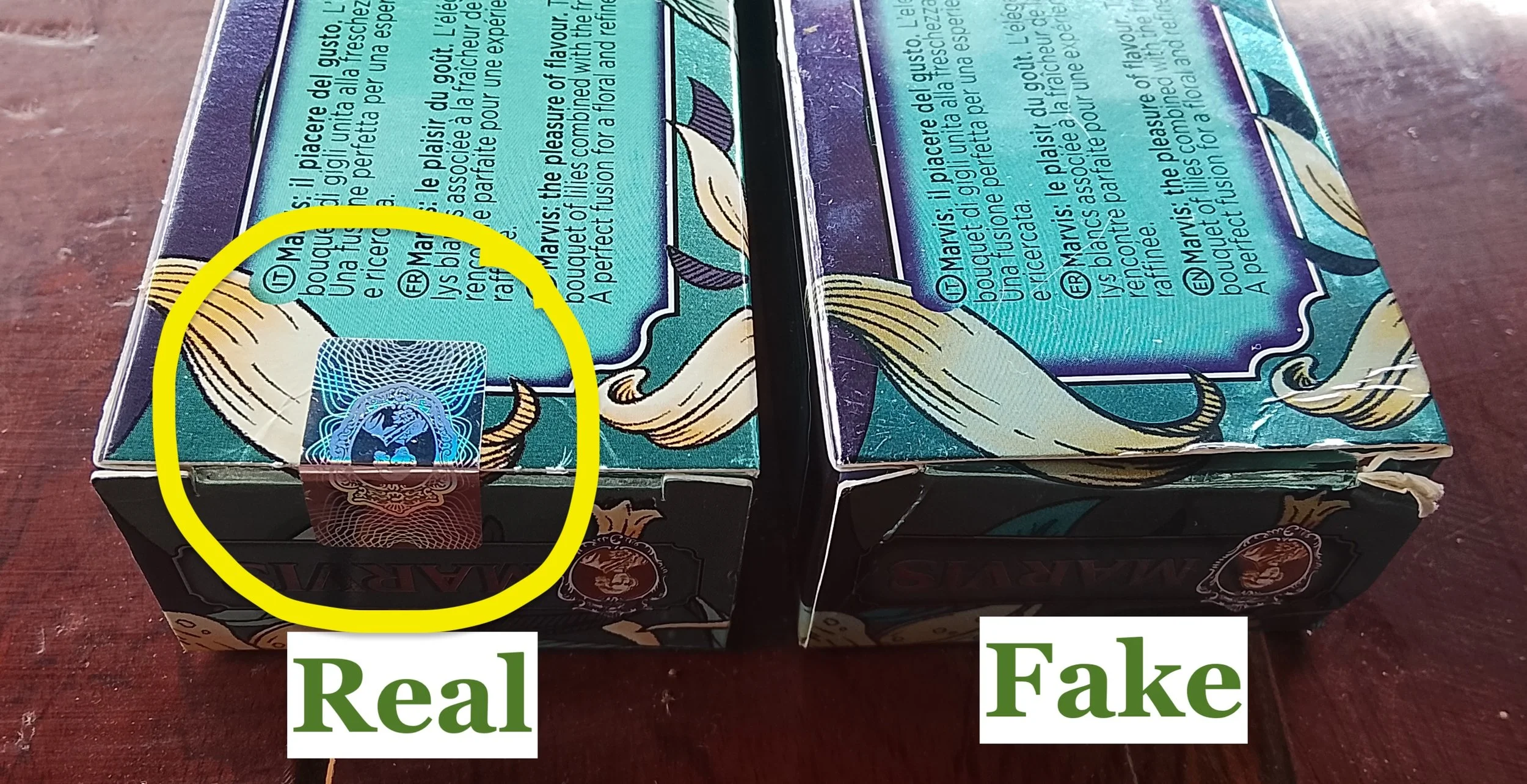
This Marvis holographic sticker has me questioning my sanity. I don’t remember ever seeing a tamper label on a Marvis box before– but that’s not to say they’re fake, just that I don’t remember! I can’t find a single photo of a Marvis box with a sticker seal online, but there are two on either end of this box. This is the #1 thing making me question the authenticity of what I’ve called the ‘real’ toothpaste in this post.
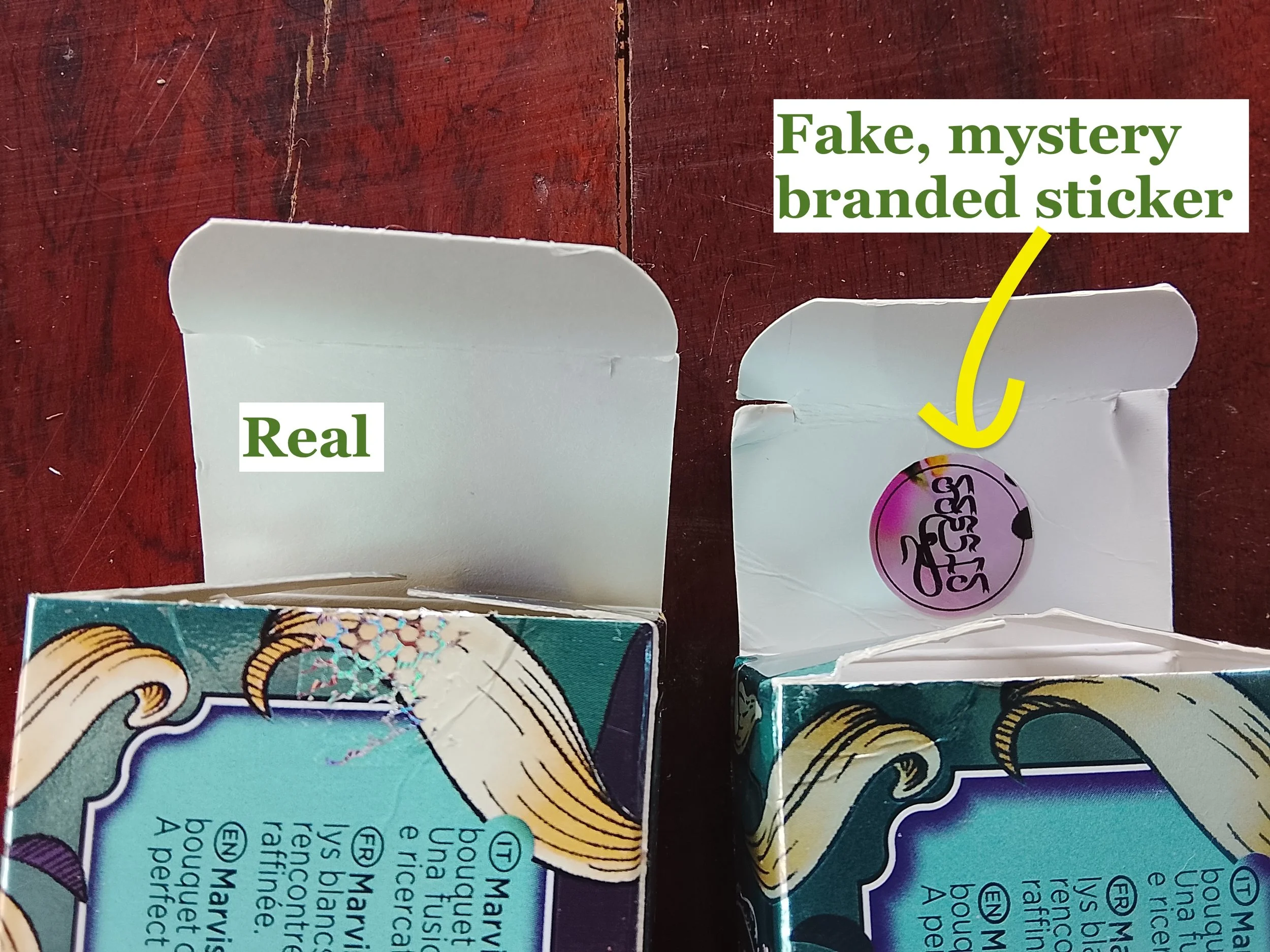
Google translate can’t figure out what language this mystery pink sticker is. I’m guessing stylized Khmer but could be anything. It’s really audacious of a manufacturer/distributor of fakes to brand themselves like this!
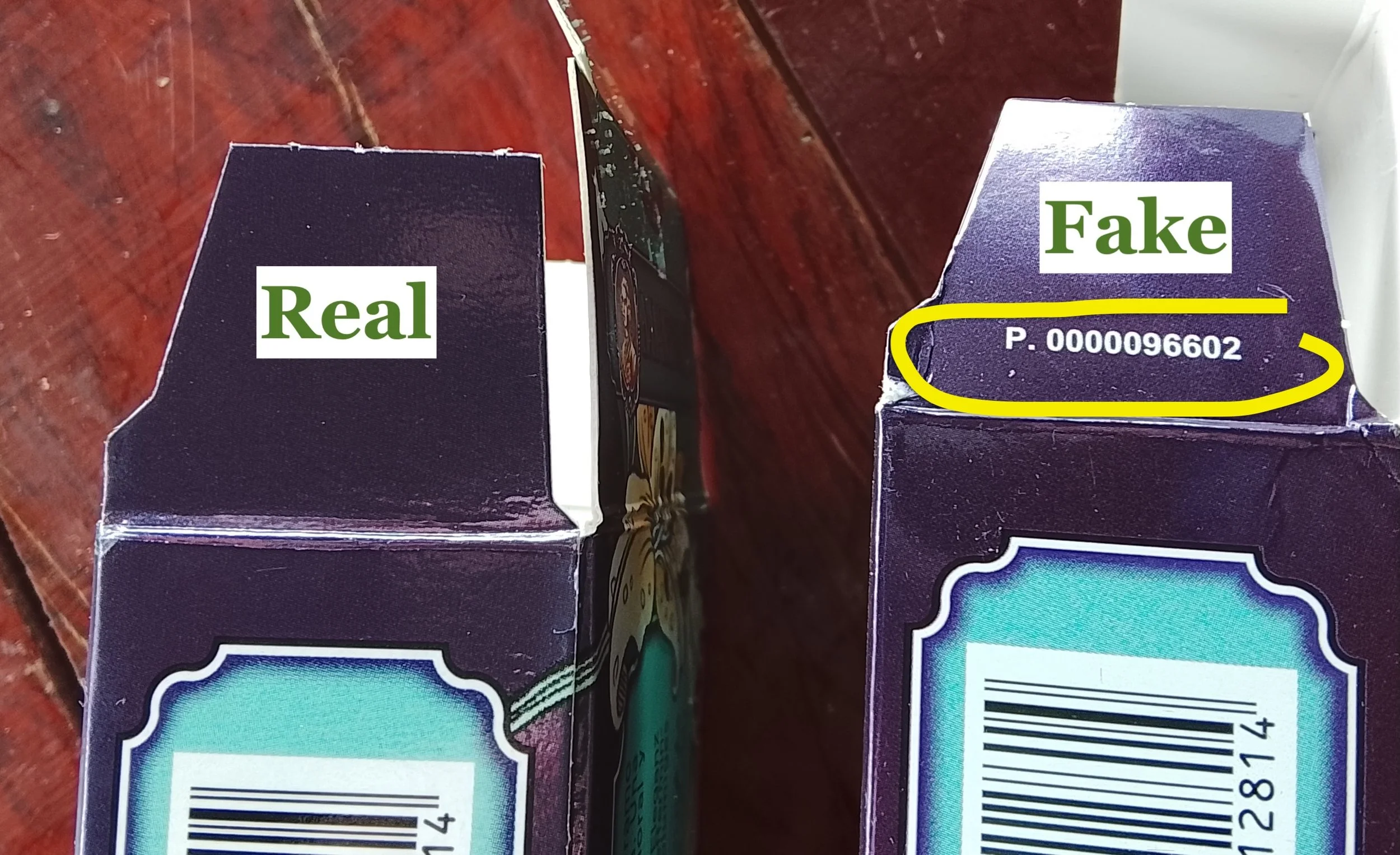
Batch or order number on the fake box that’s not on the real one.
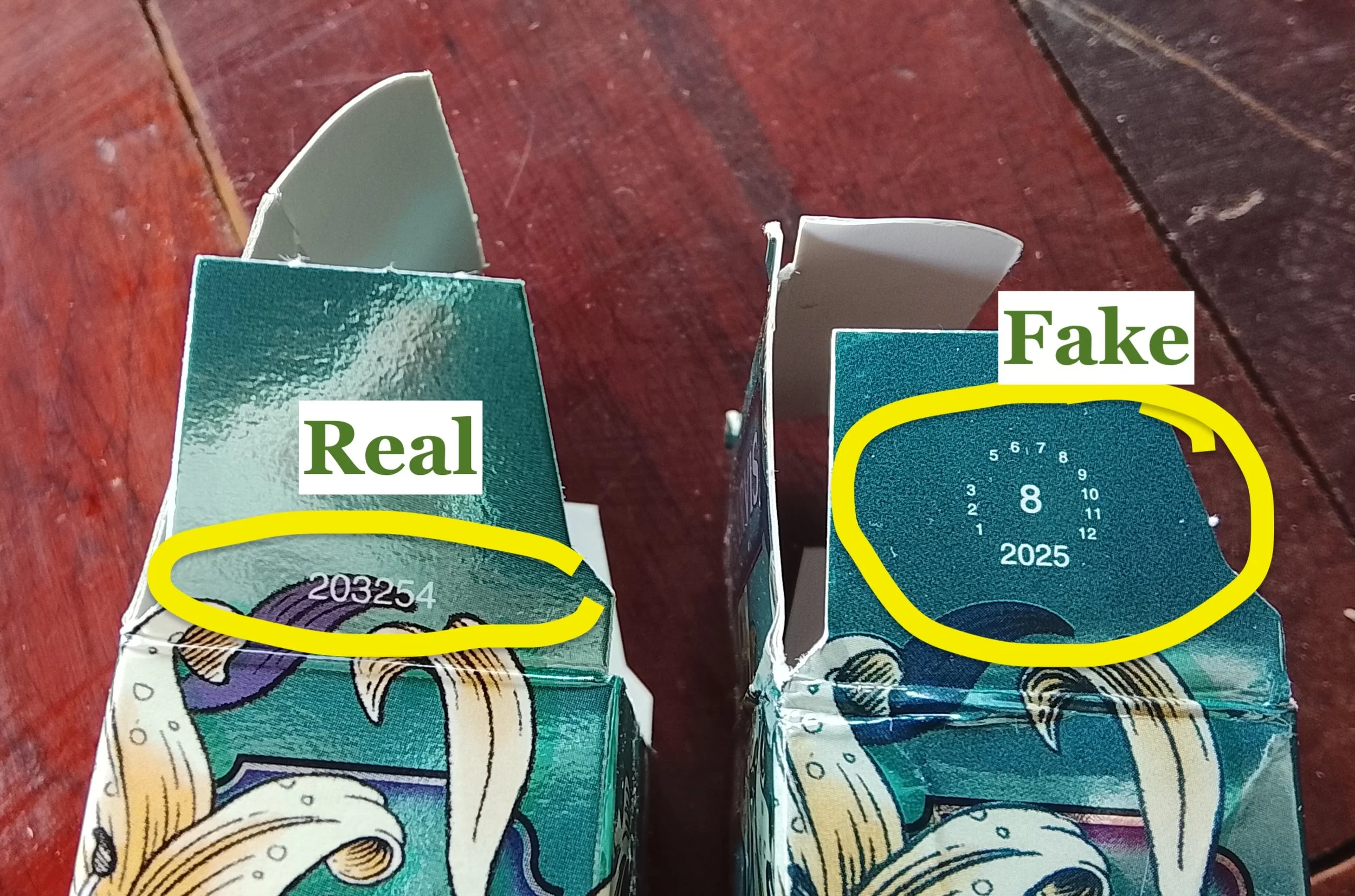
The real box has some sort of batch code that looks quite different from the fake box
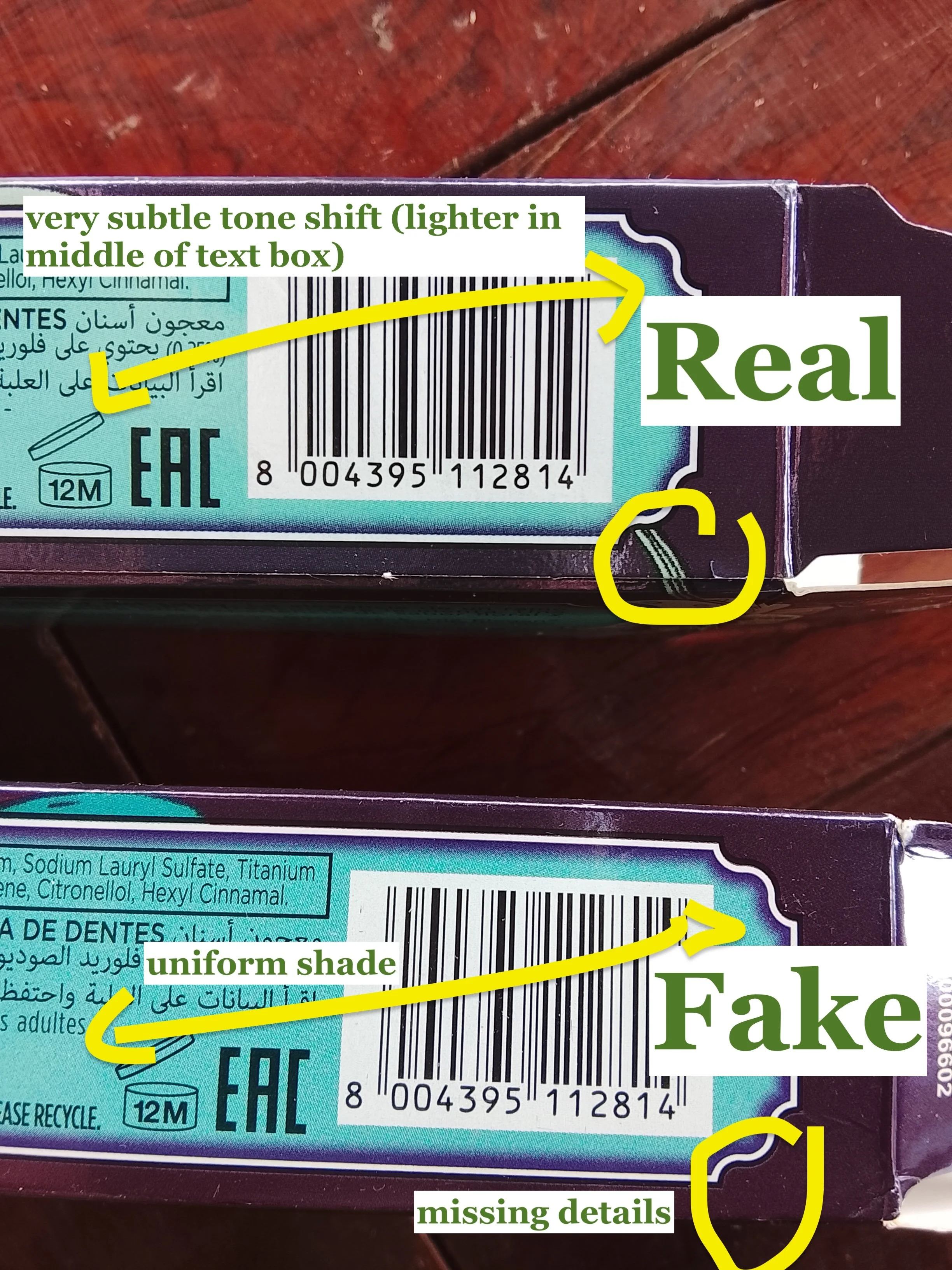
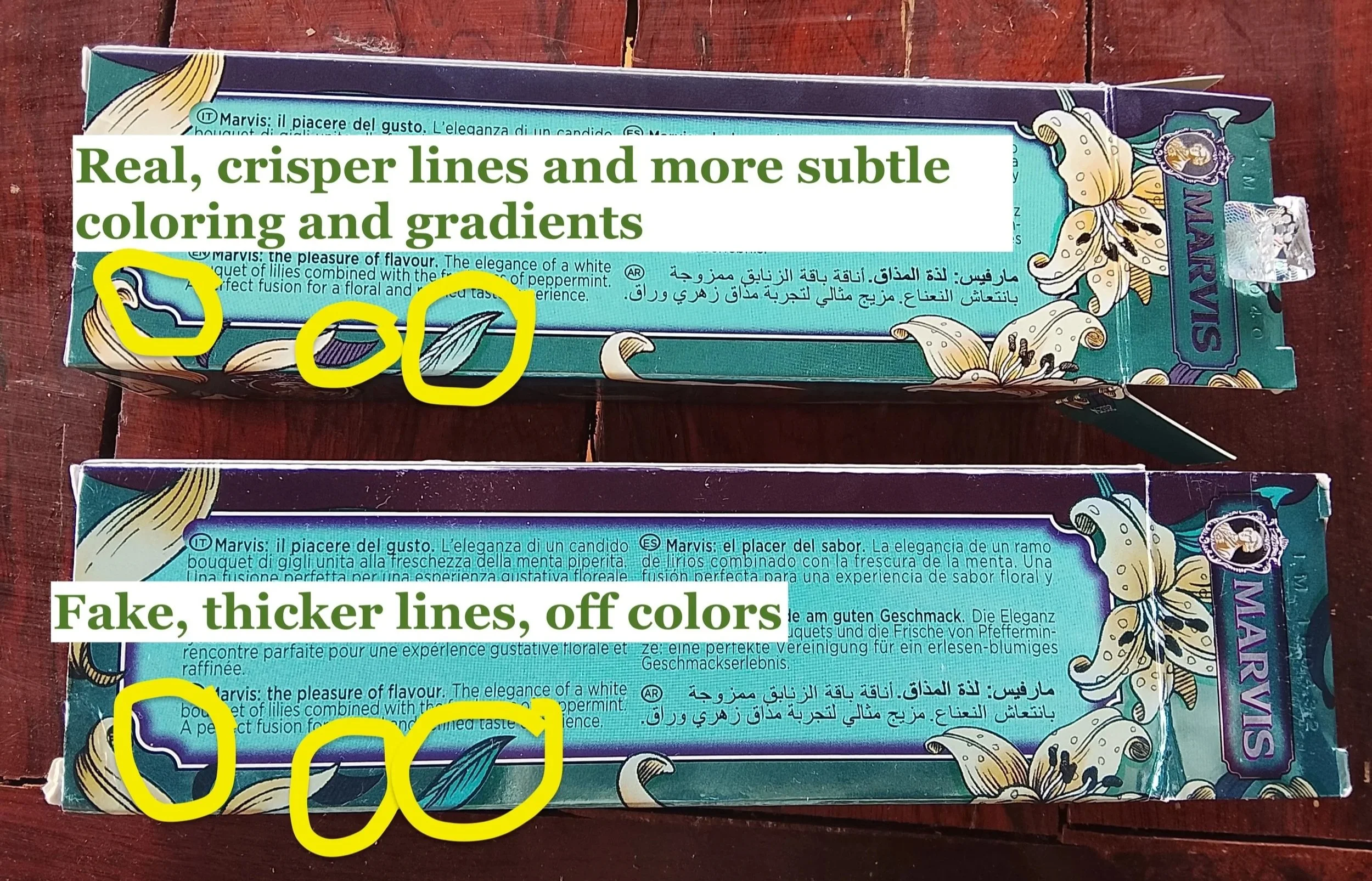
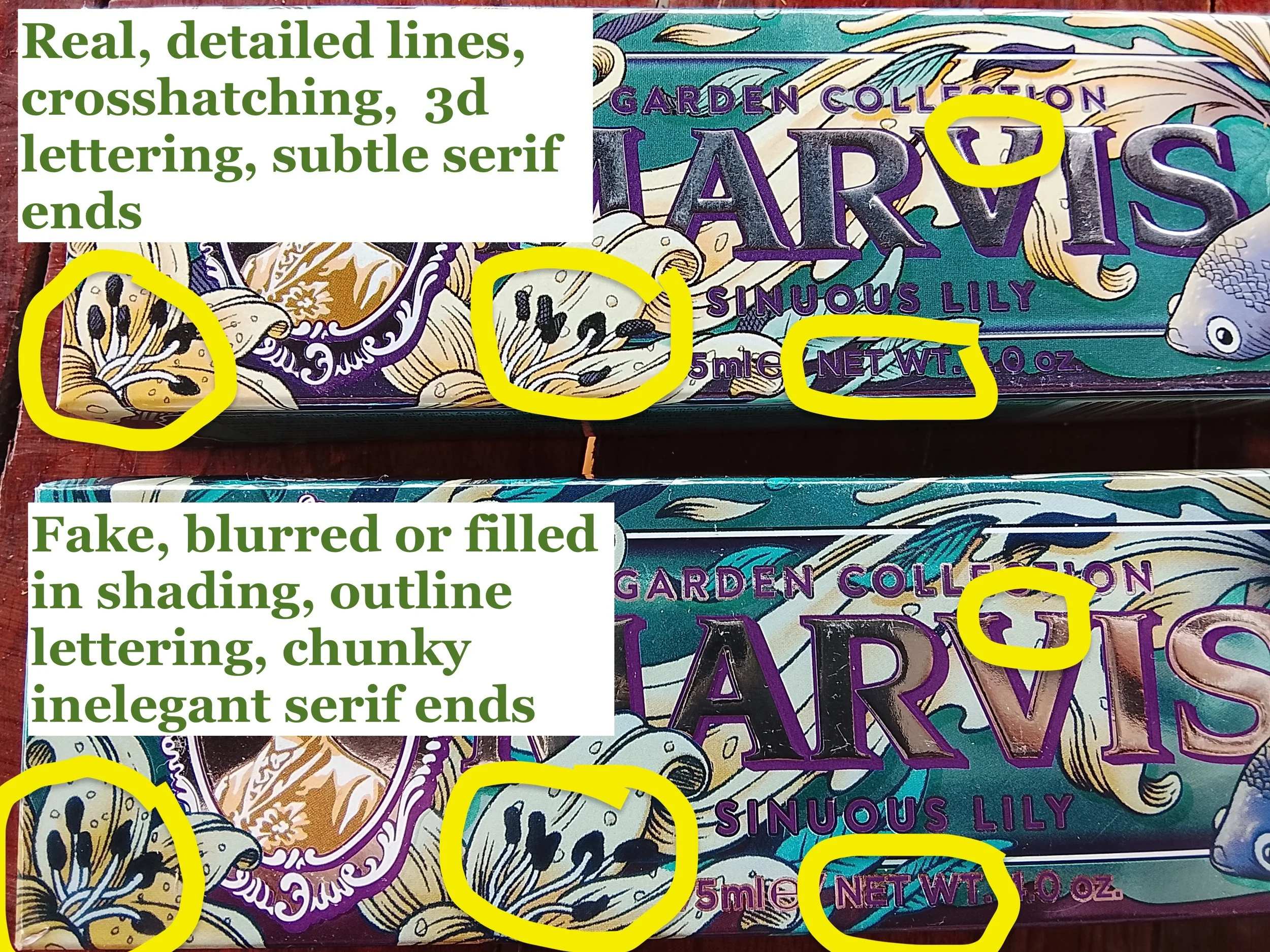
The fake box looks like a low quality photocopy of the real box
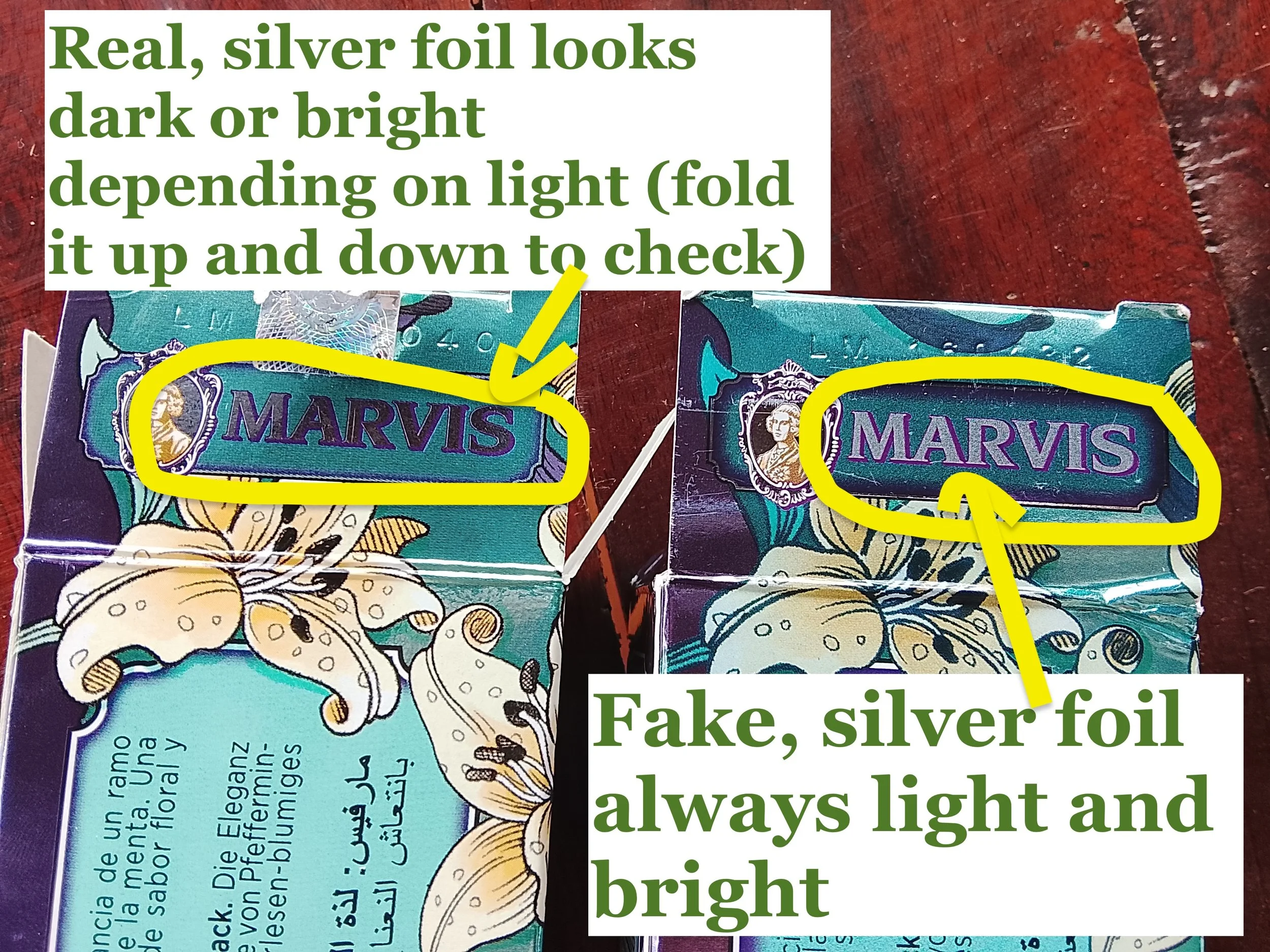
I don’t know enough about printing to have the vocabulary to describe this, but whatever makes the shiny silver parts of these boxes is different. On the real Marvis box, the silver really shines if the light hits it at the correct angle, but darkens in shadow. The silver on the fake box is light and bright regardless.
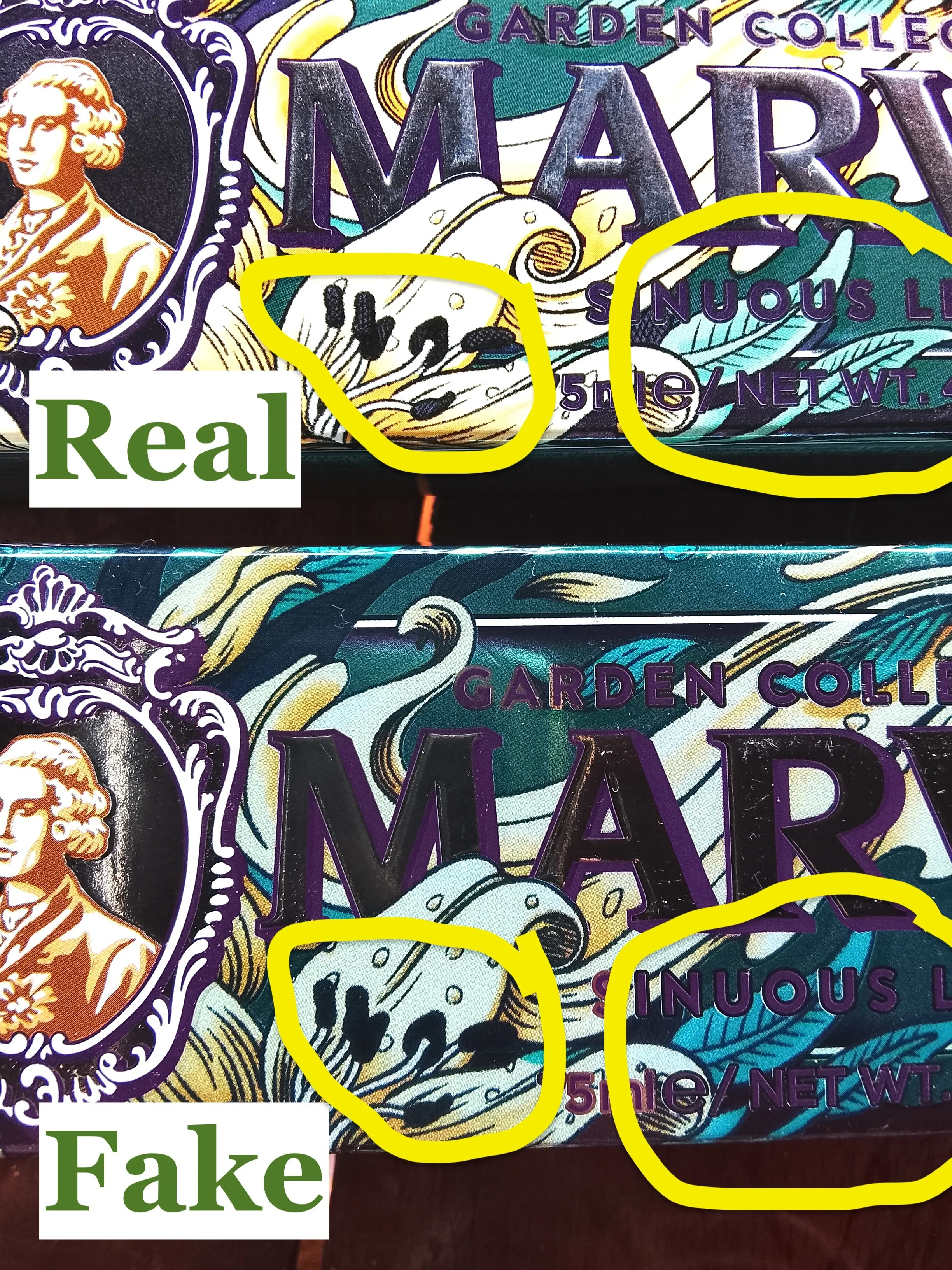
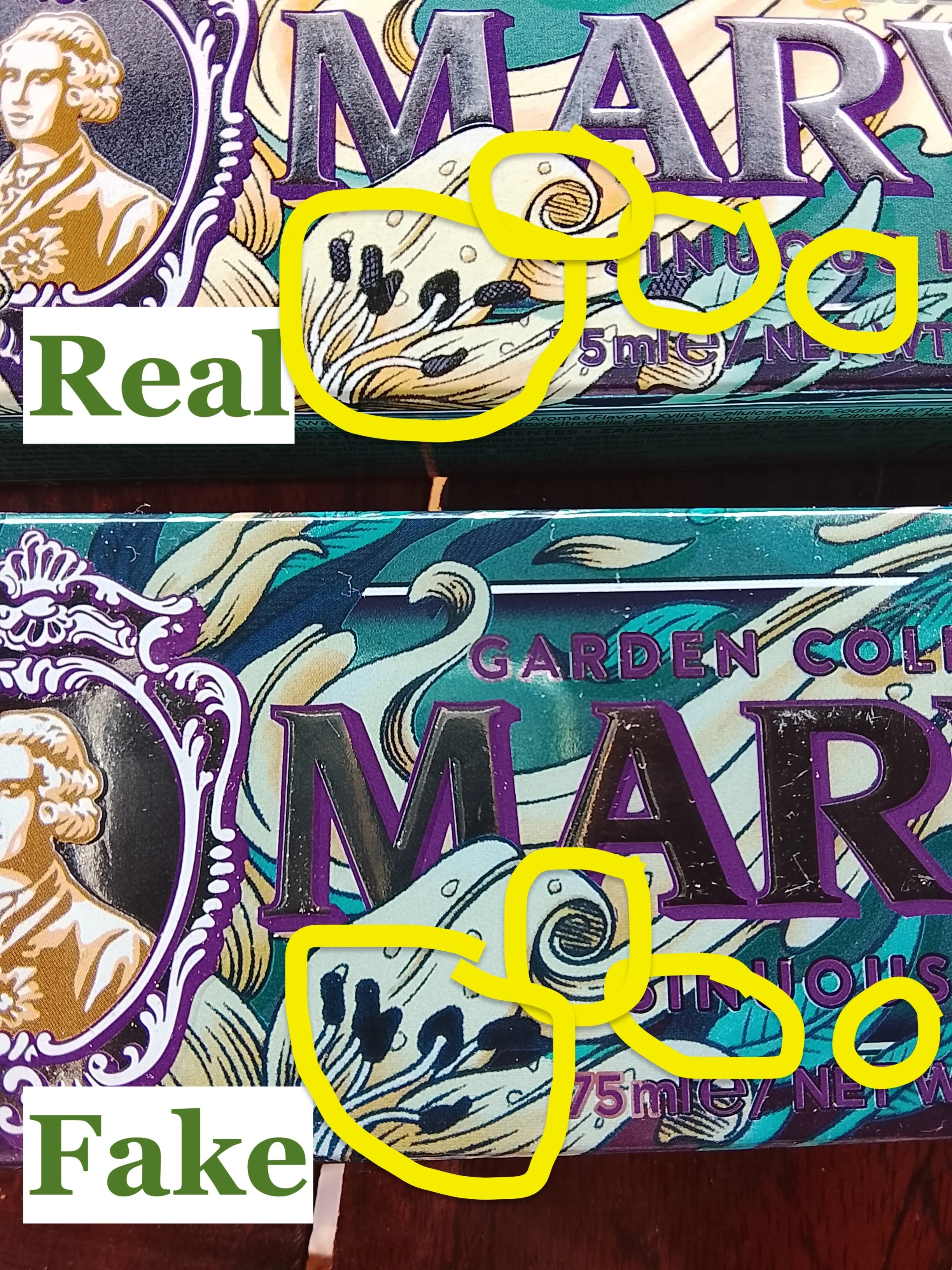
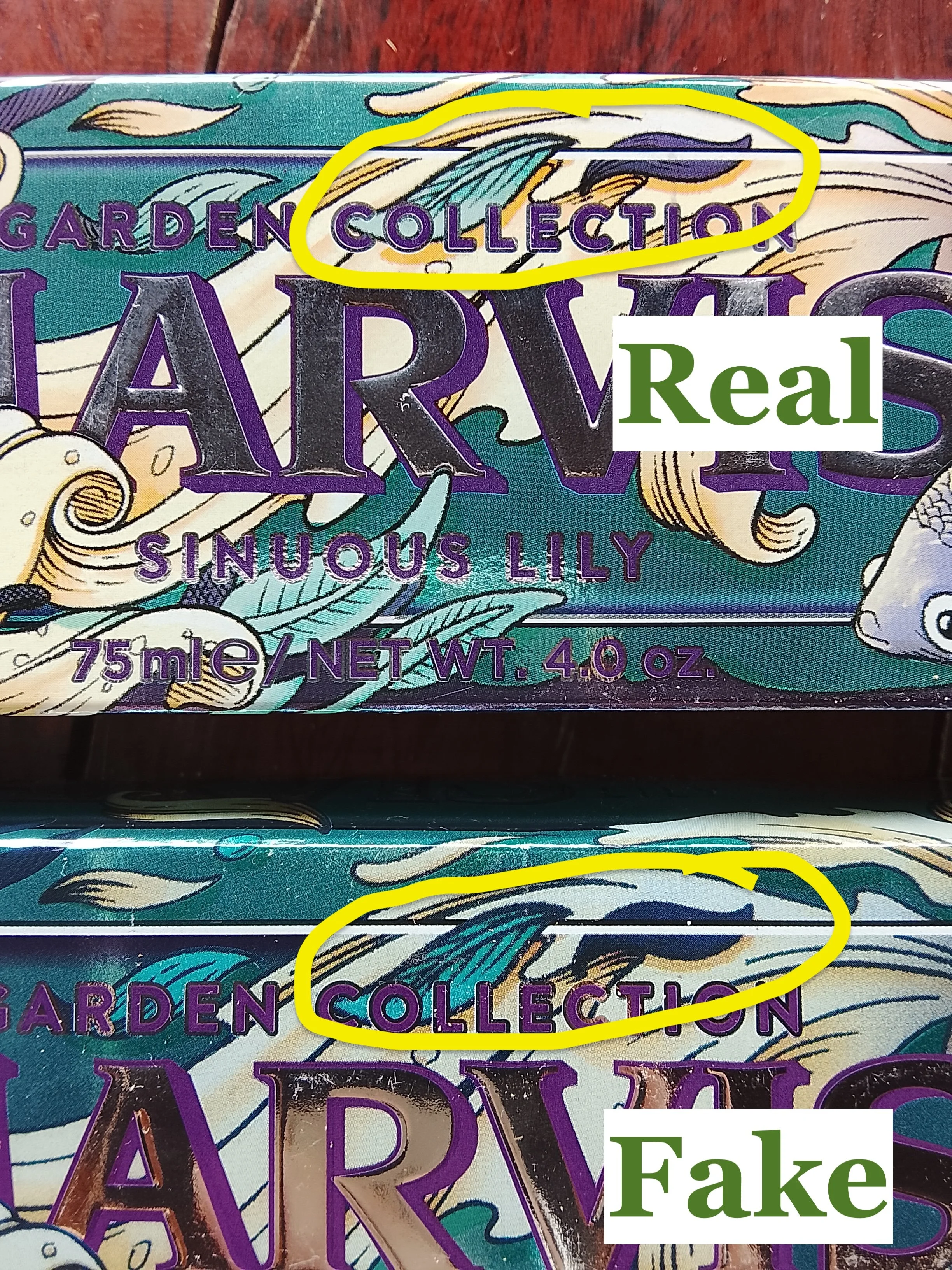
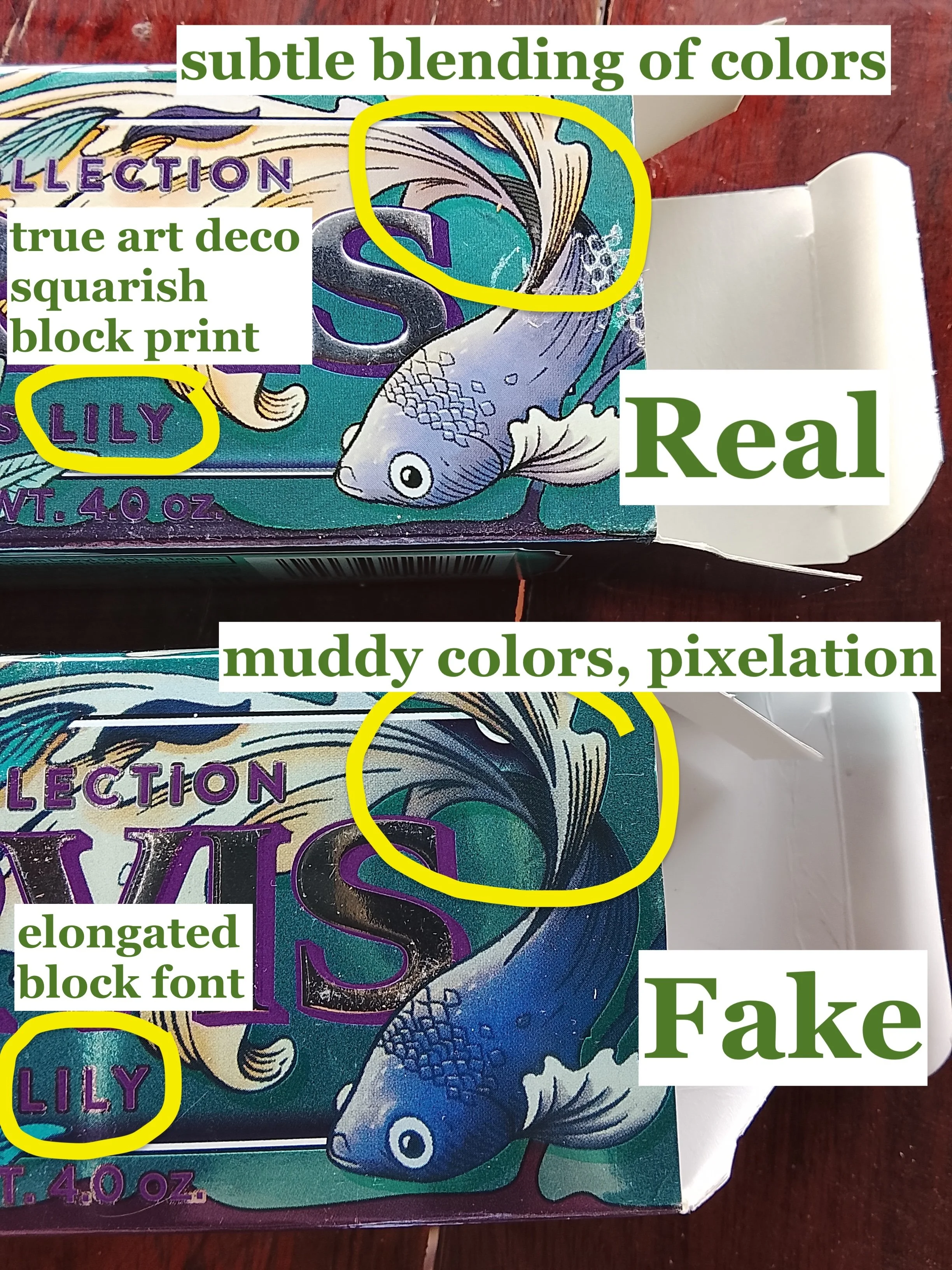
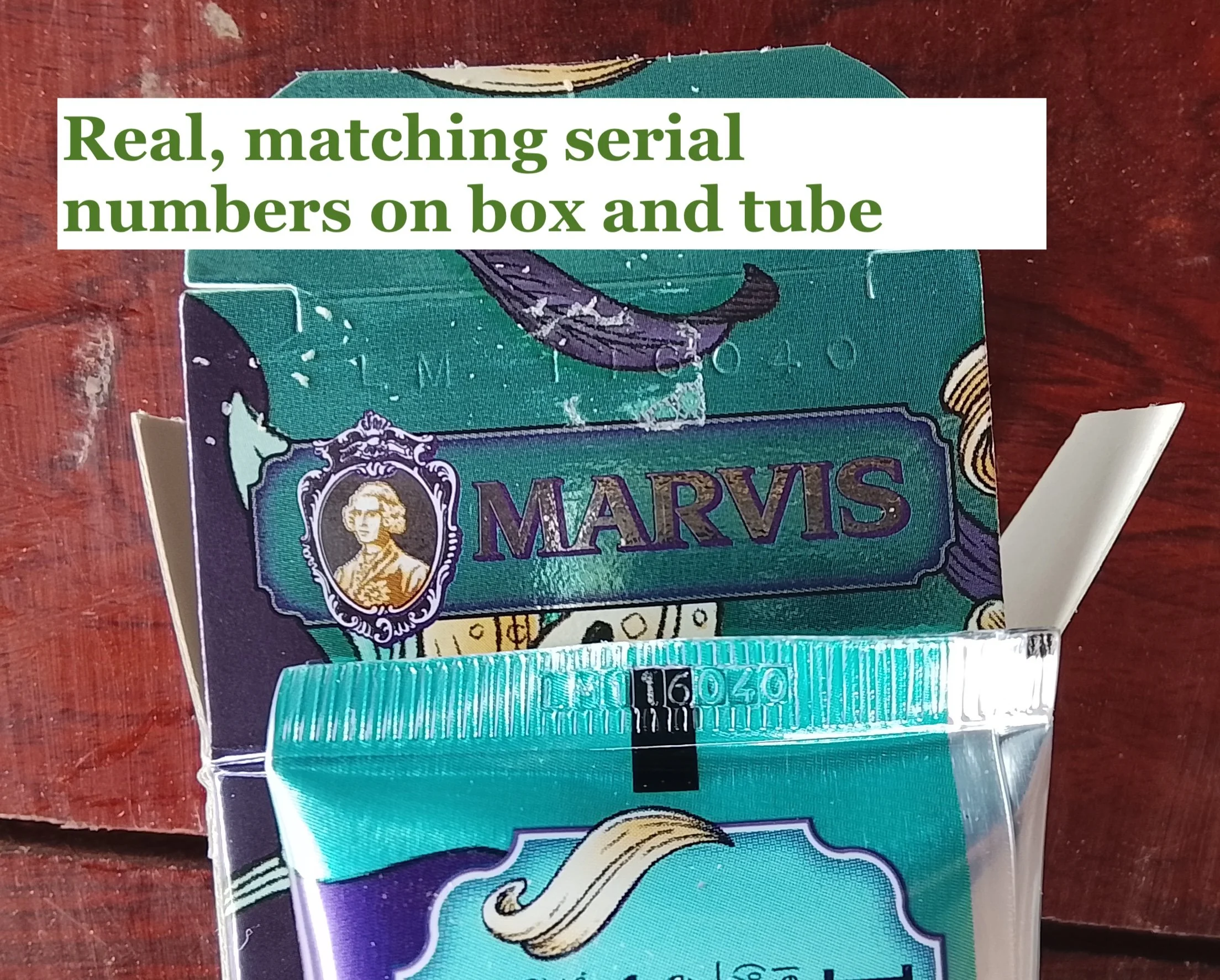
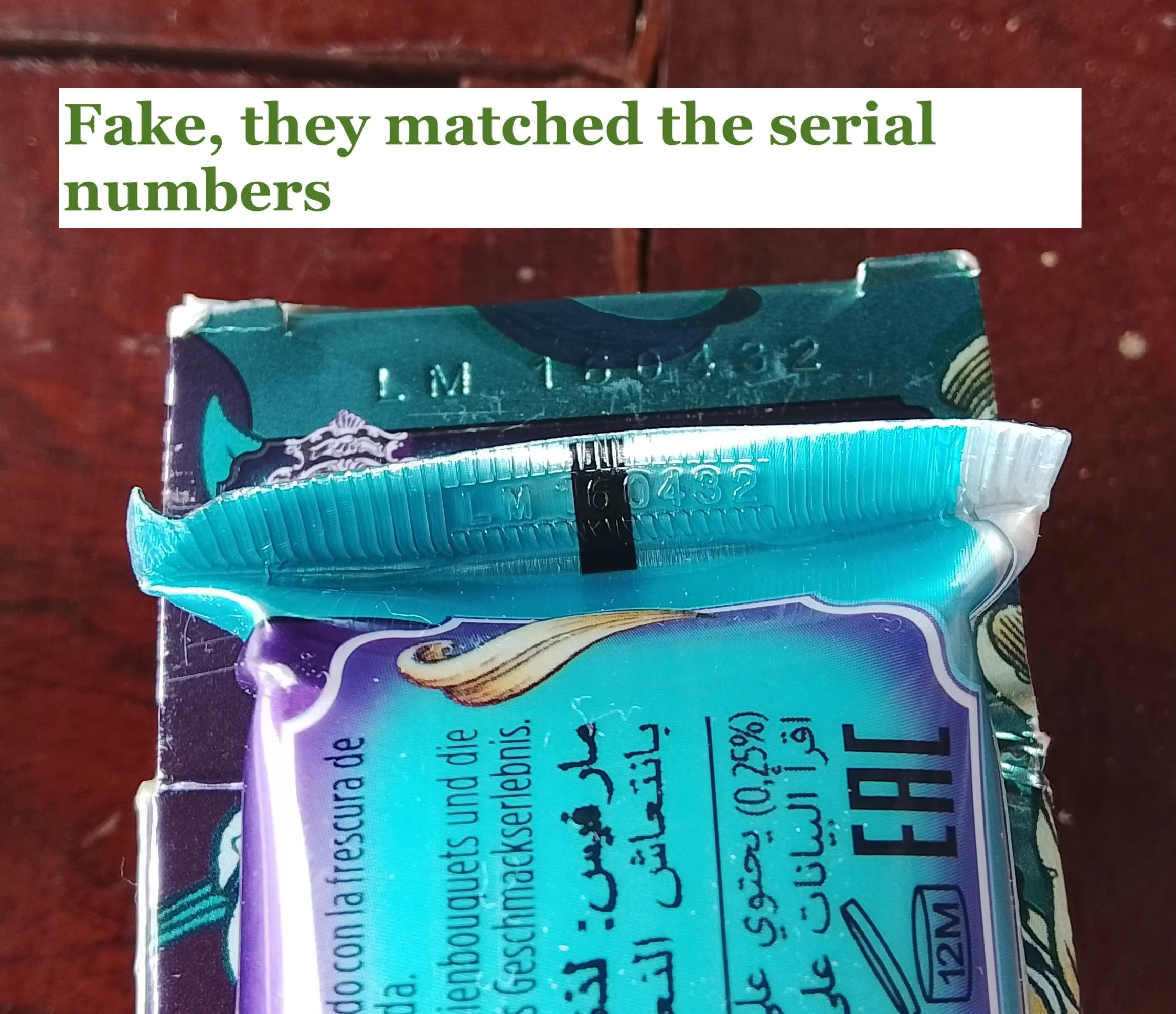
Lots of ‘how to spot fake Marvis’ reviews noted that the serial numbers on fakes wouldn’t be there, or wouldn’t match the serial number on the box. They matched them on this fake.
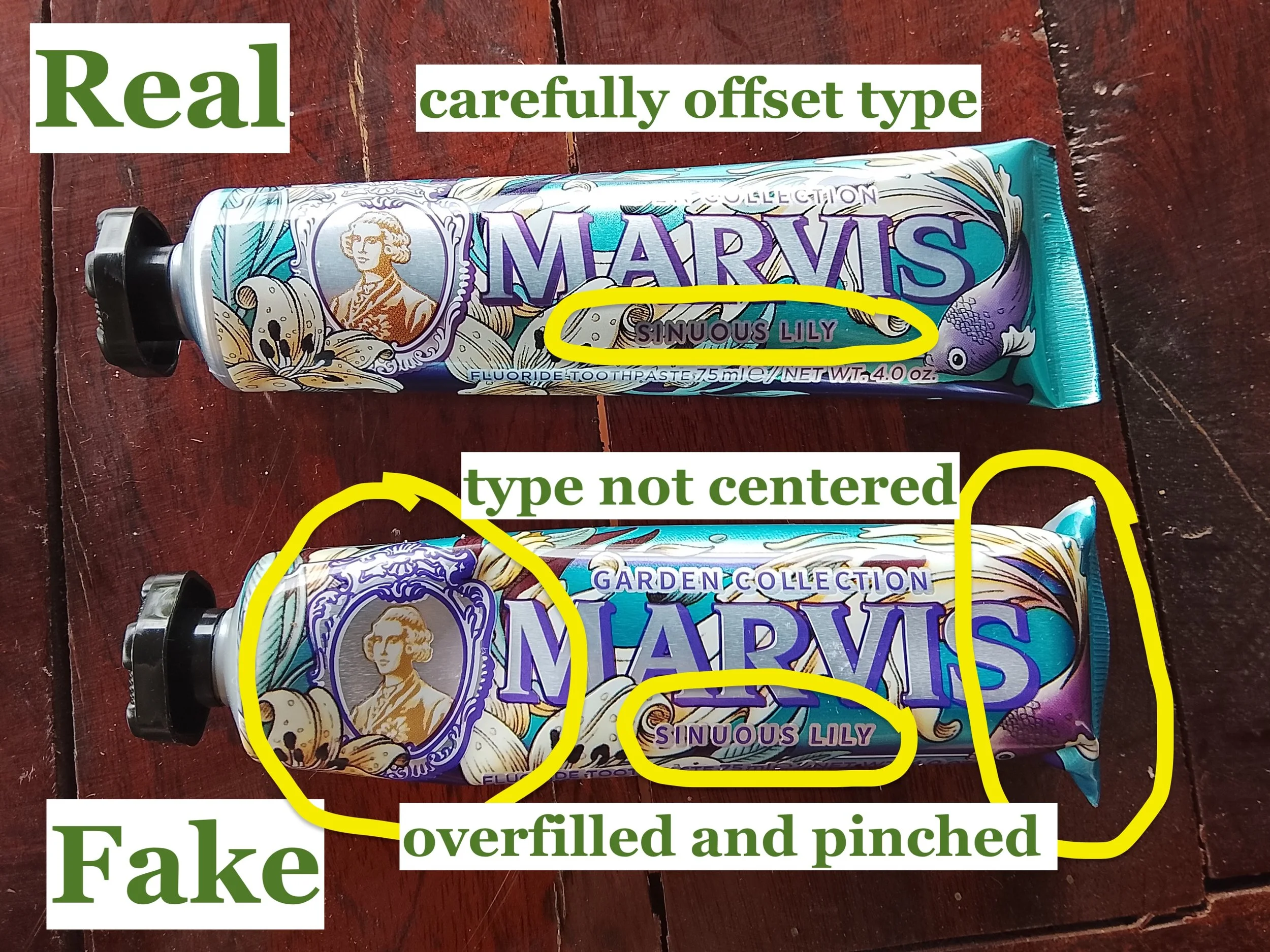
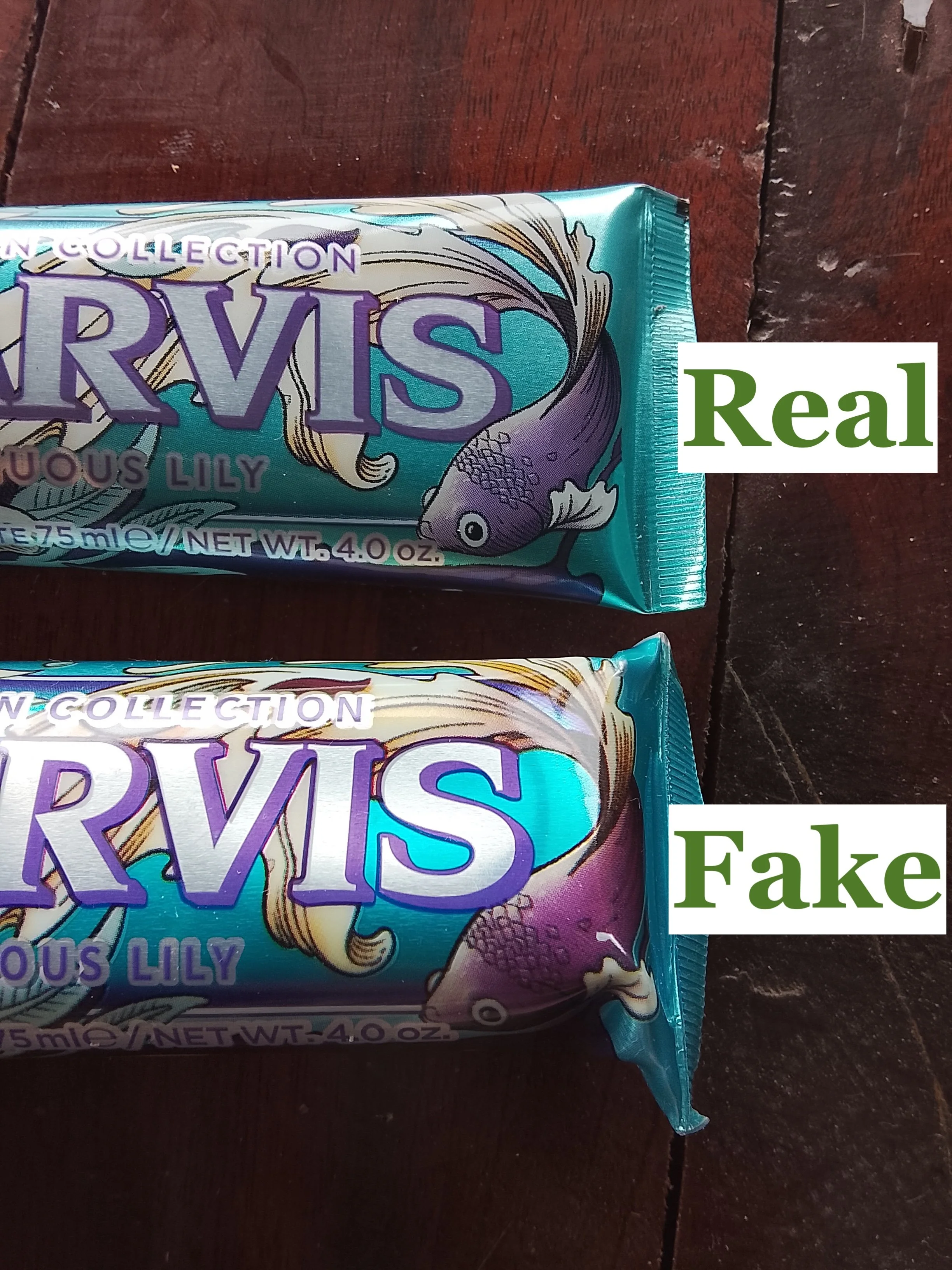
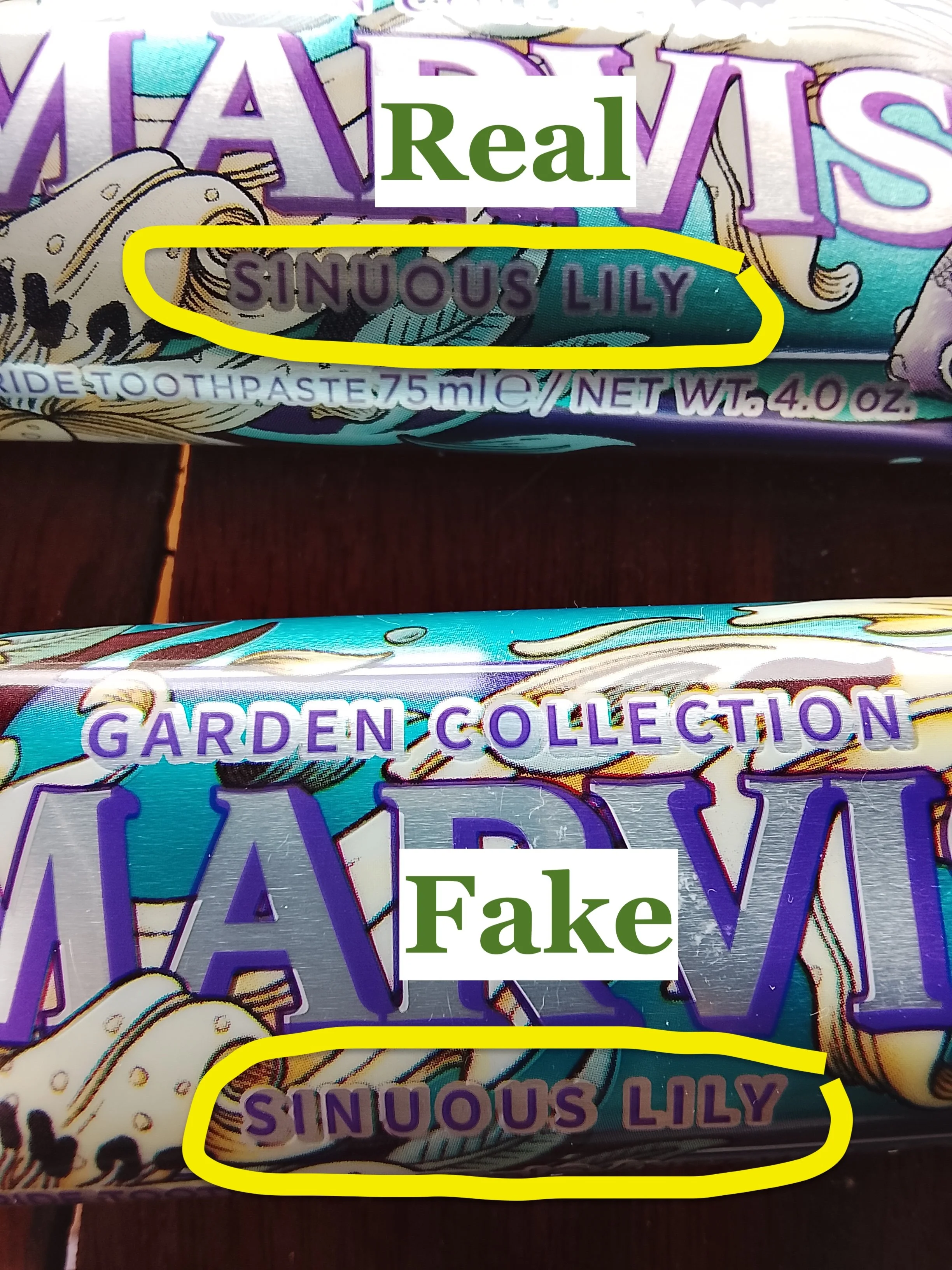
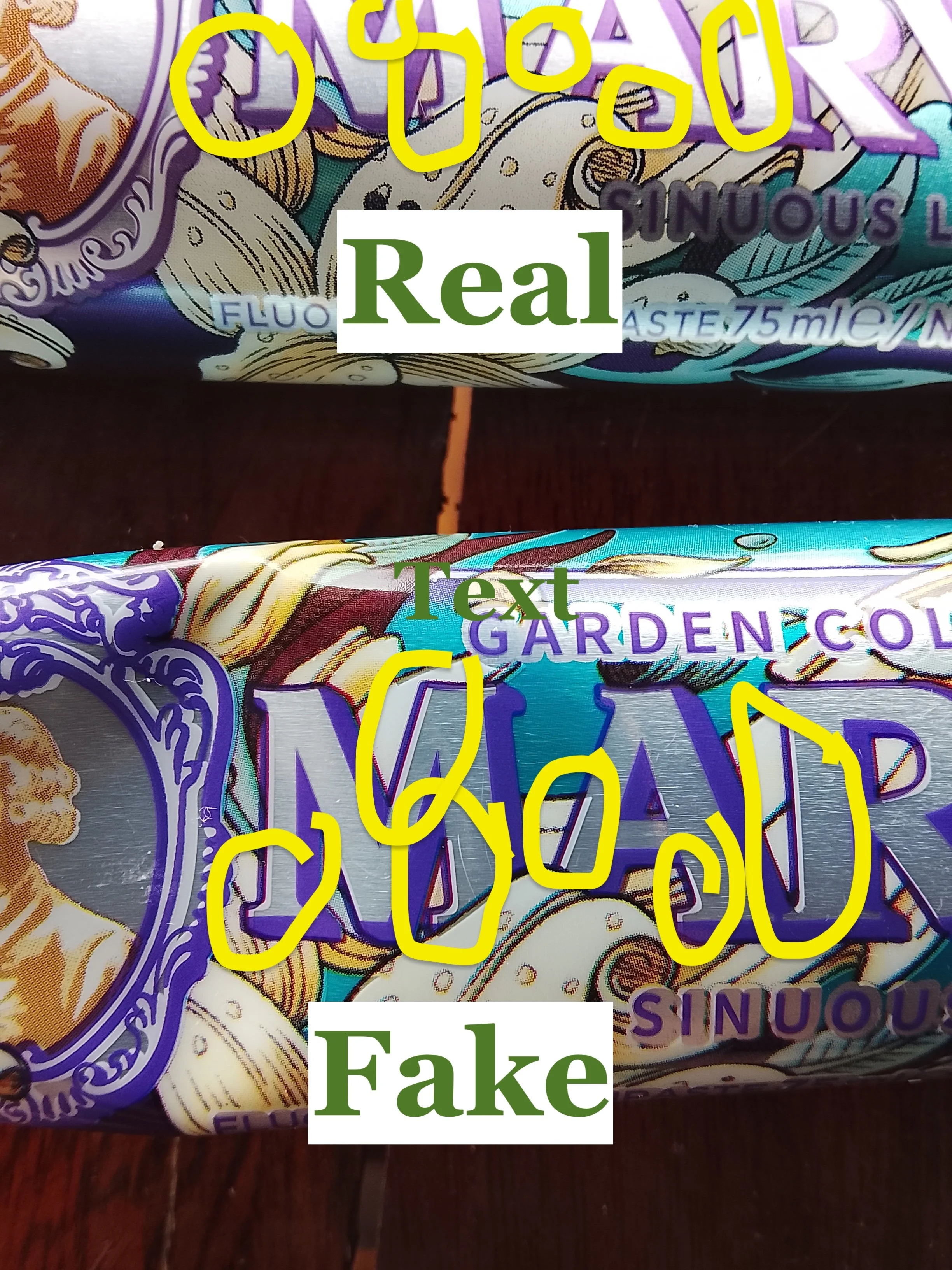
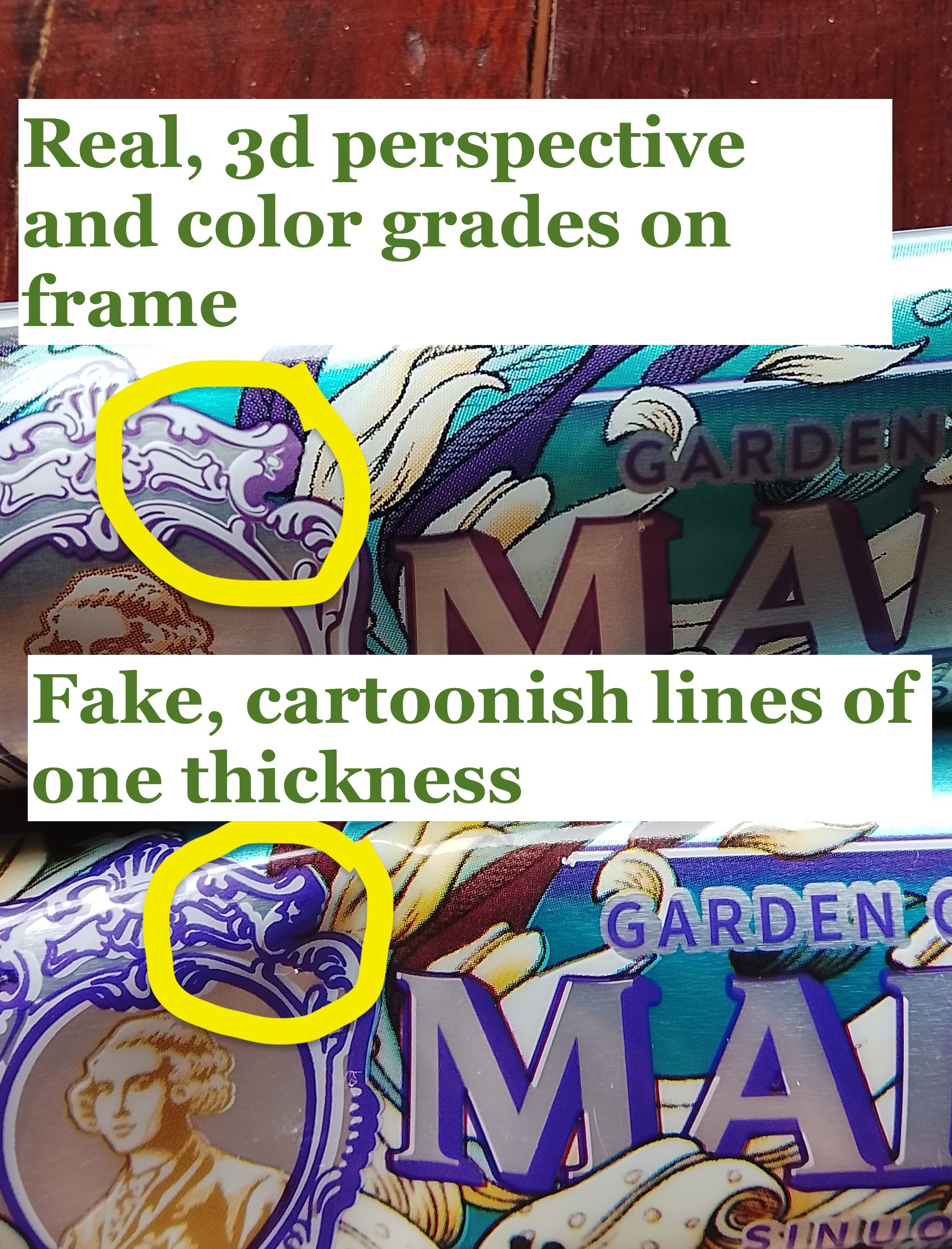
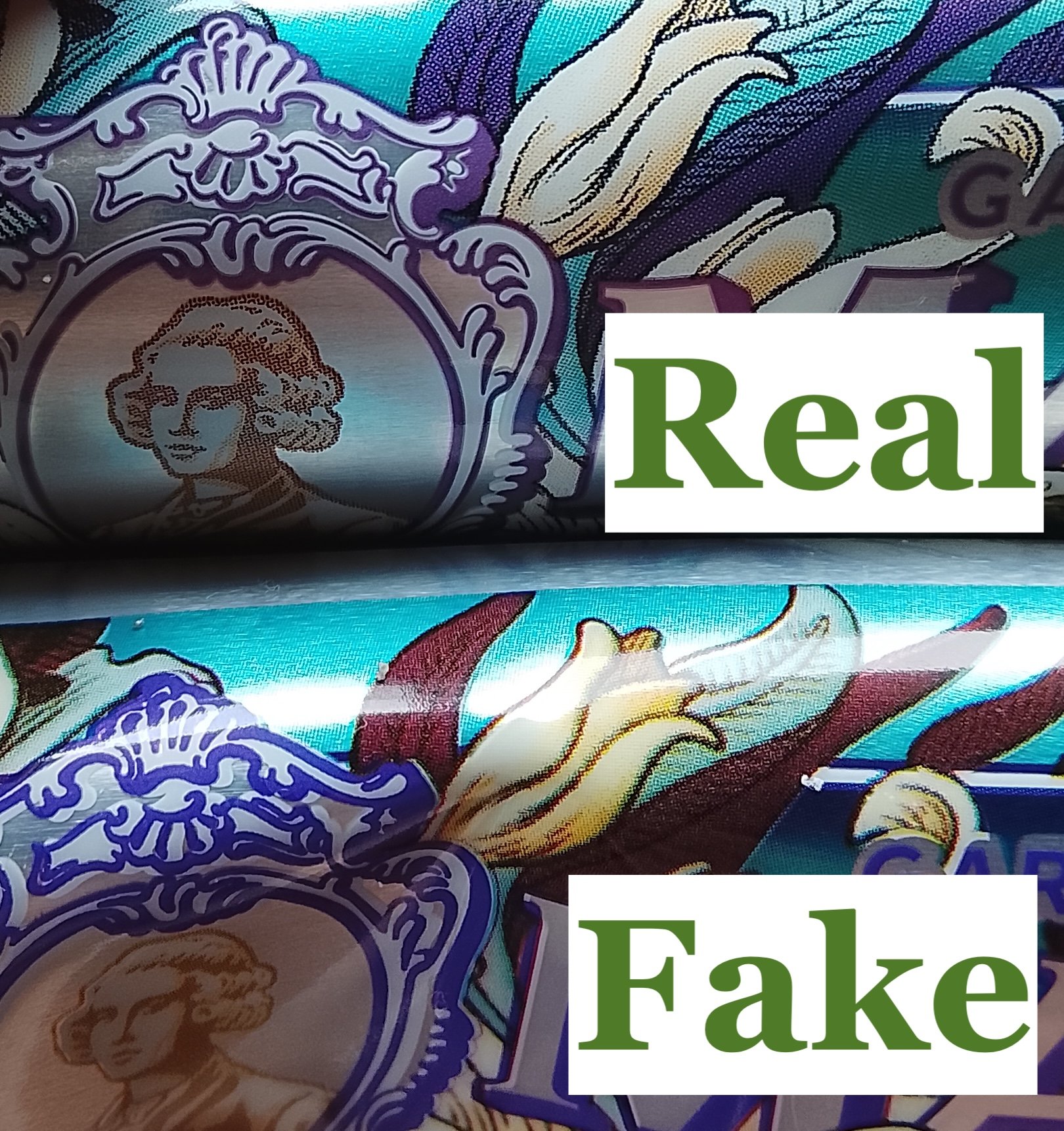
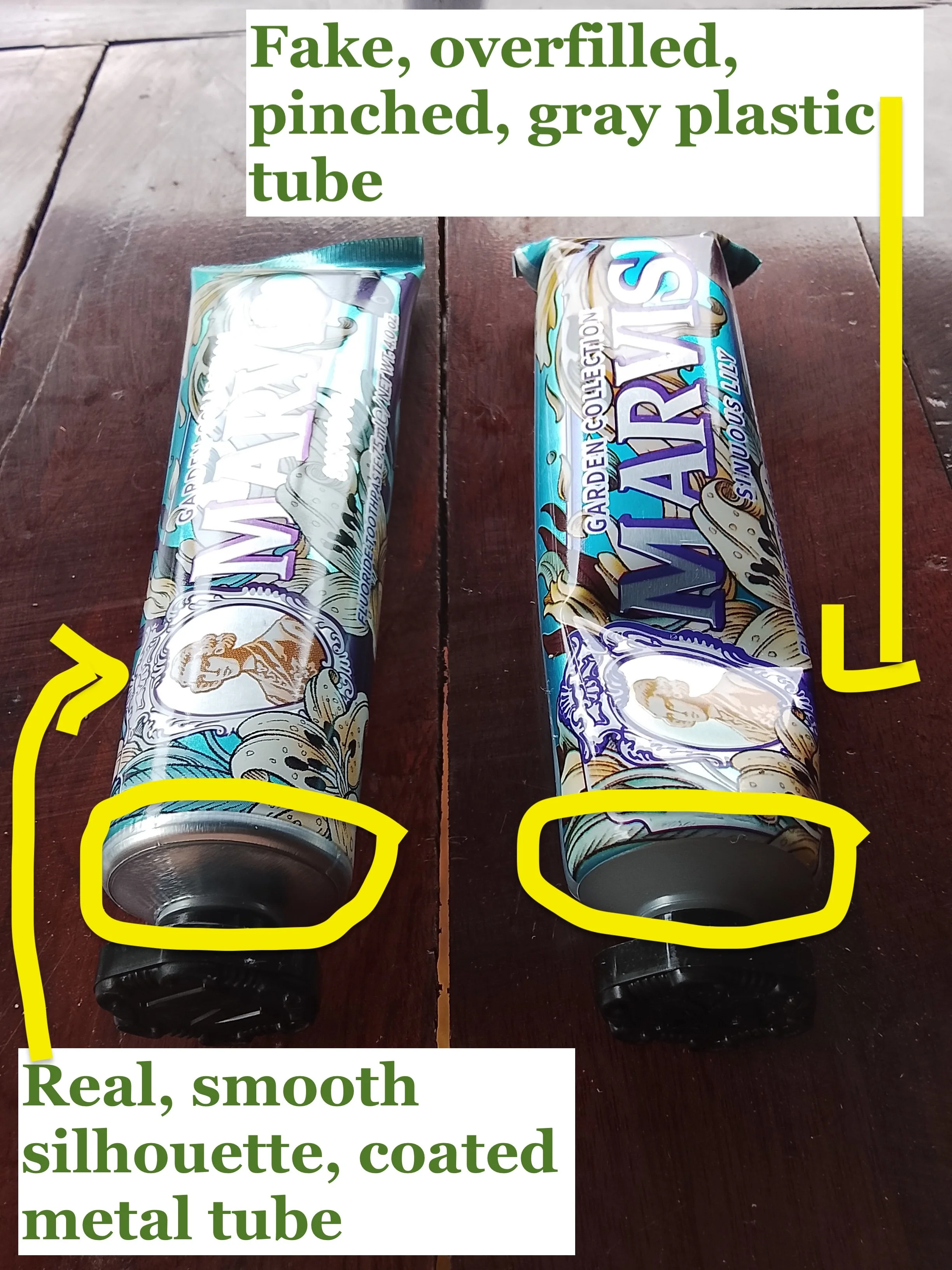
I should say, it’s not metal coated with plastic, it’s ‘aluminum look’ plastic
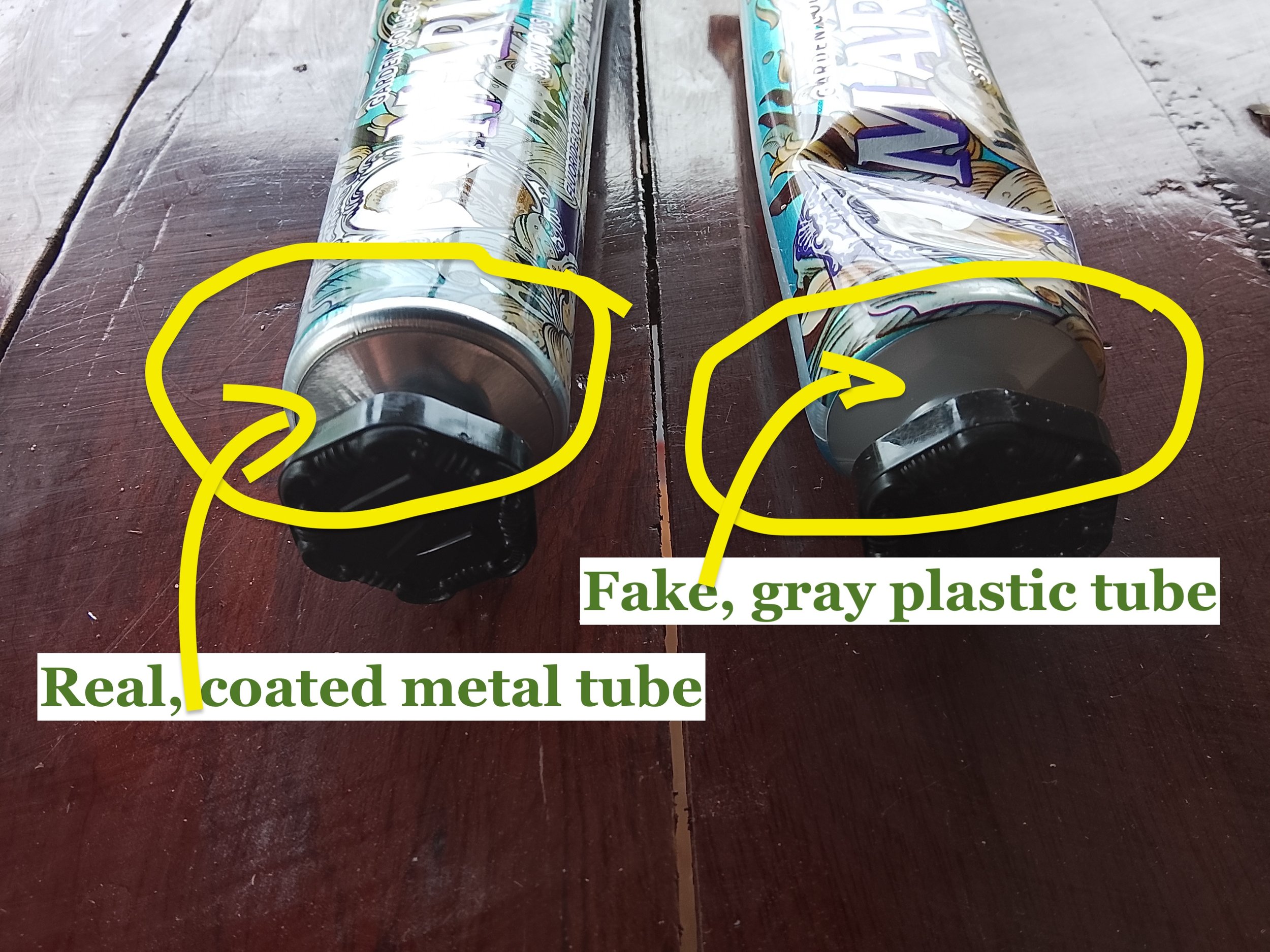
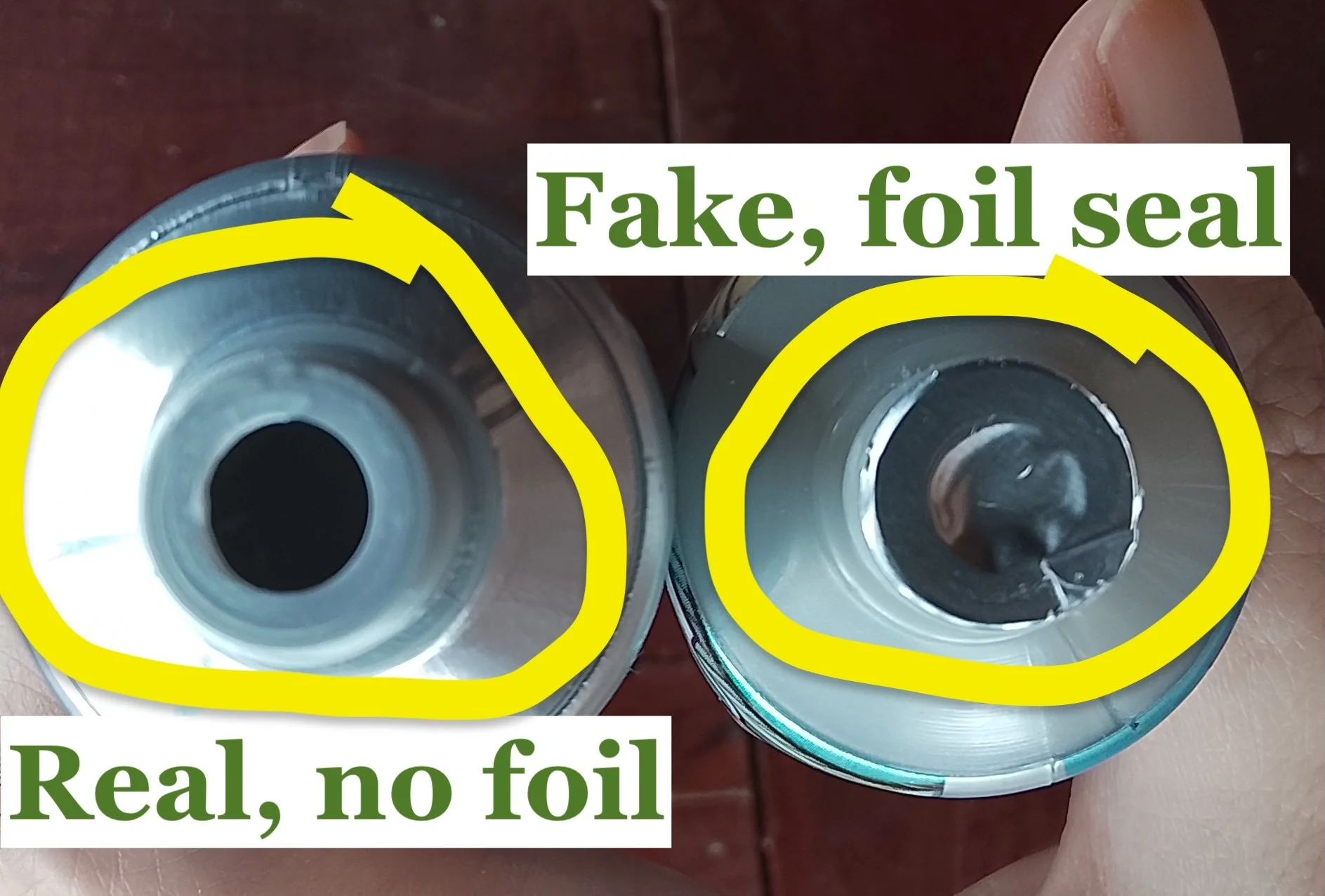
Apparently Marvis tubes are unsealed in the EU, and used to be unsealed in the US too. Now, they do seal tubes for certain markets depending on local law, but in SEA (where it’s safe to say there are almost no laws) a sealed tube more likely indicates a fake.
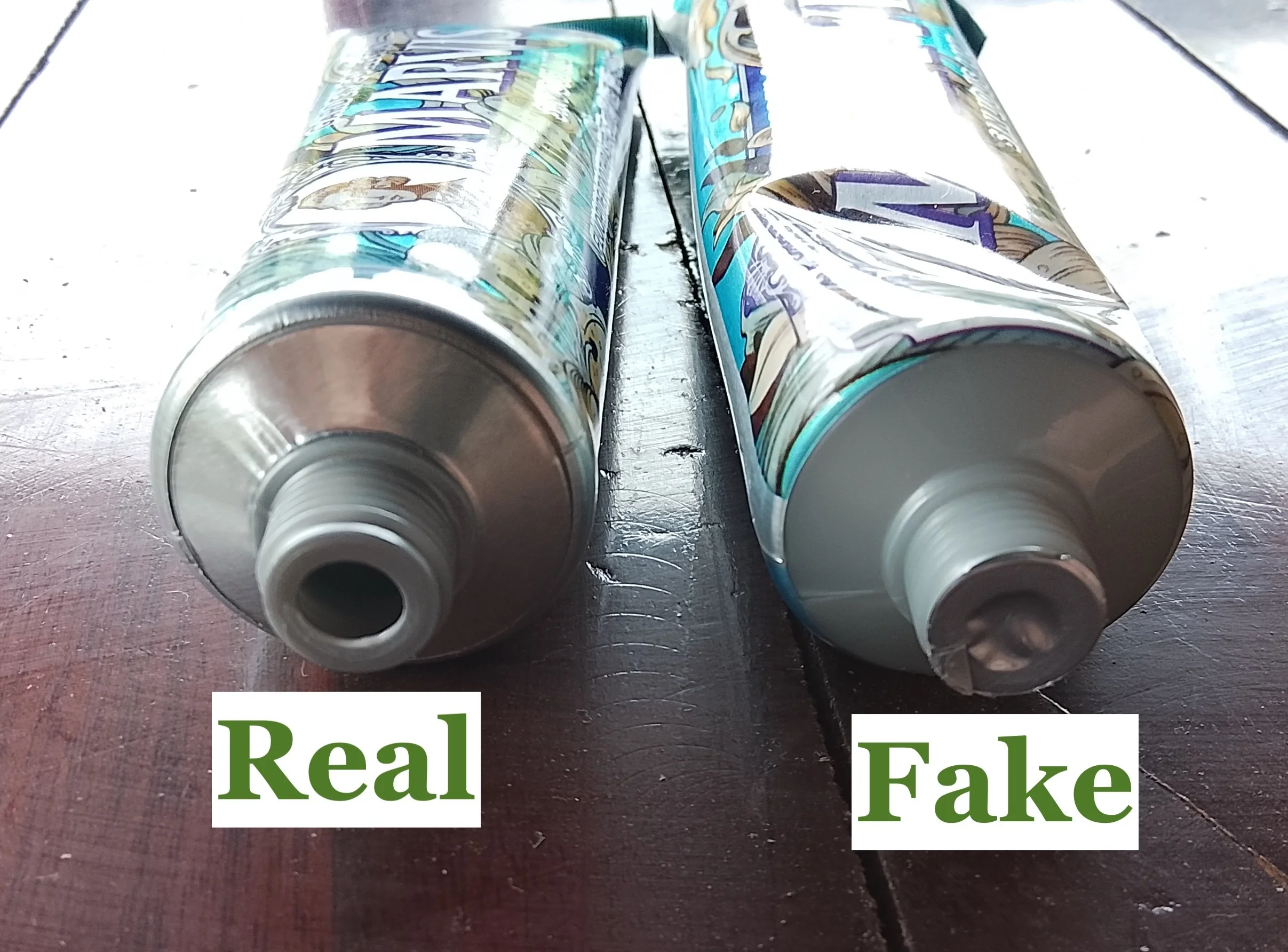
This is the the #2 thing making me question the authenticity of what I’m calling the ‘real’ tube of toothpaste in this post. It has plastic threads. I remember Marvis having metal threads. But that was years ago– at least a decade. Maybe they’ve gotten cheaper, or EU laws have changed? Maybe that’s only for the classic tubes, not the limited editions? Not sure, but this really bothers me.
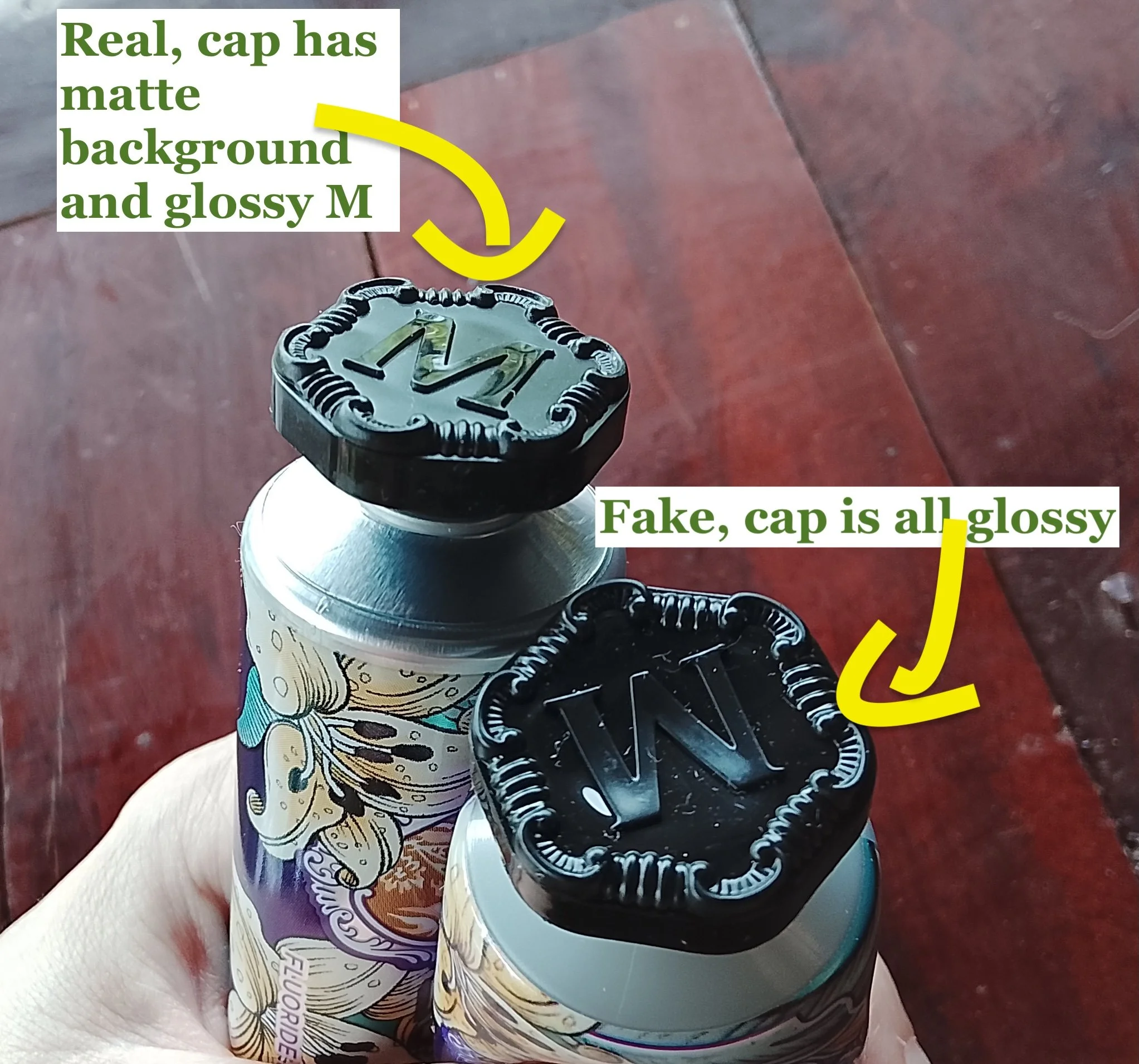
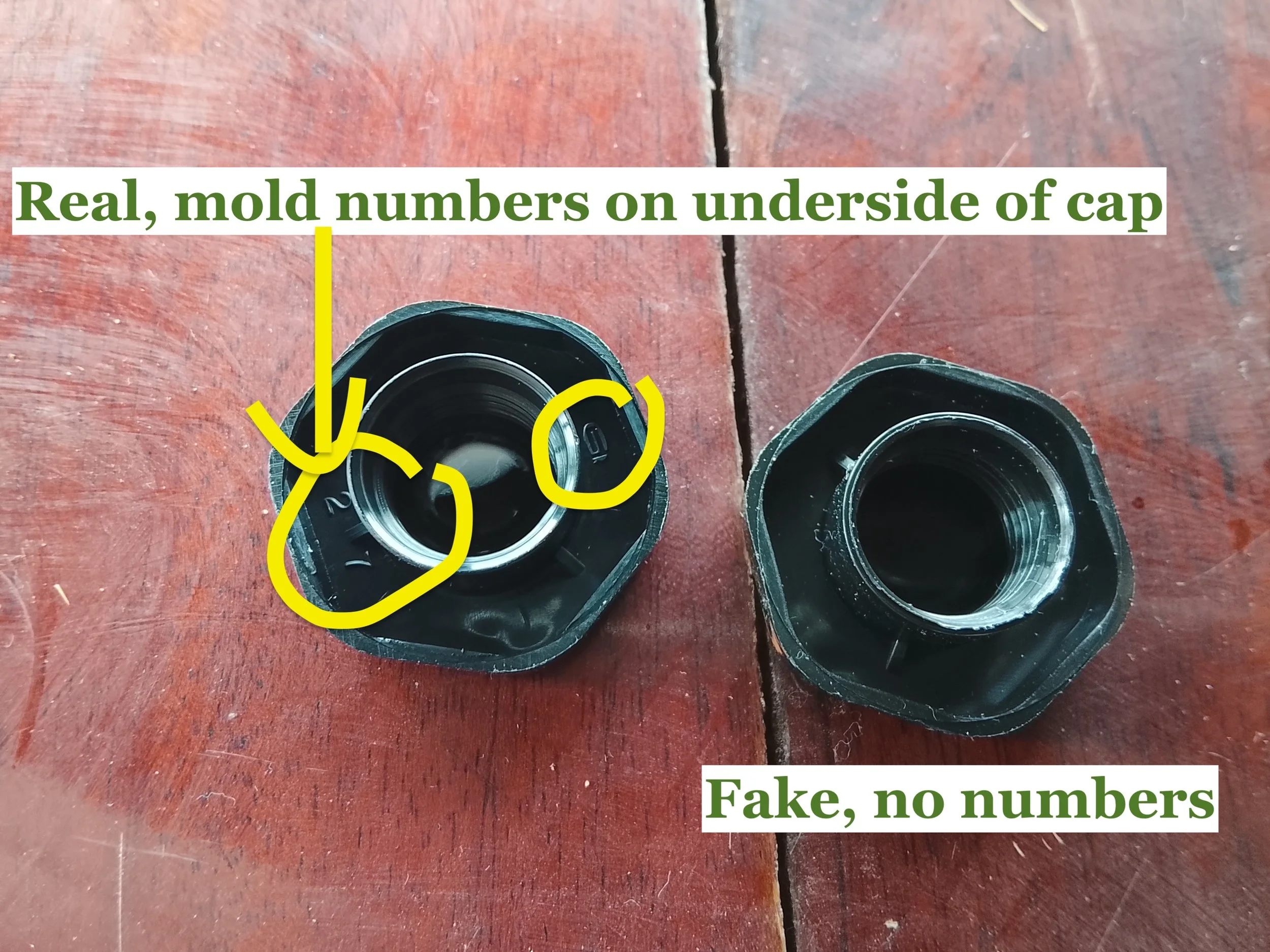
I’d say the #1 giveaway that a Marvis tube is fake is not what you can see, it’s what you (can’t) smell– the fake tube of Sinuous Lily just smelled like generic mint toothpaste, not even a hint of floral. The real toothpaste smells strong and lovely.
Big giveaway #2 is that gray plastic tube. #3 is the overfilling. It’s clearly hand stuffed and pinched in a way you’ll never see in a new factory filled tube from any brand. #4 the printing fuckups, the type not being centered inside its own outlines. #5 the threads not screwing smoothly. This is another thing you wouldn’t notice in isolation, but when comparing the authentic tube to the inauthentic tube, the cap screws on easily the first time on the authentic tube. On the fake tube, I found myself trying three or four times to not screw the cap on at an angle.
My best piece of advice is open the box and look at the tube, even if shop employees stare you down. Worst comes to worst, just tell them you accidentally bought a fake before and want to make sure it’s real. Side by side with the real one, the fake box is clearly inferior; but at a glance, trusting in my local shop, grabbing and going, it passed. The colors are pretty, the design is right, and it’s embossed like the real one, so it passes the touch test. It was only when I opened the box and saw the tube that I knew something was wrong.
A disappointing update!
Bayon City Mart responded to my google review defending their fake products:
Response from the owner 2 weeks ago
First of all, I would like to thank you for your supporting our convenience store. Refer to your review above, we have cross check with our suppliers and confirmed this is real product that made in Italy with web:wwwmarvis.com and we checked on bar code in google also show the bar code is corrected in Italy moreover we have verify in Gimini that mavis toothpaste is real. Thanks
To state the obvious:
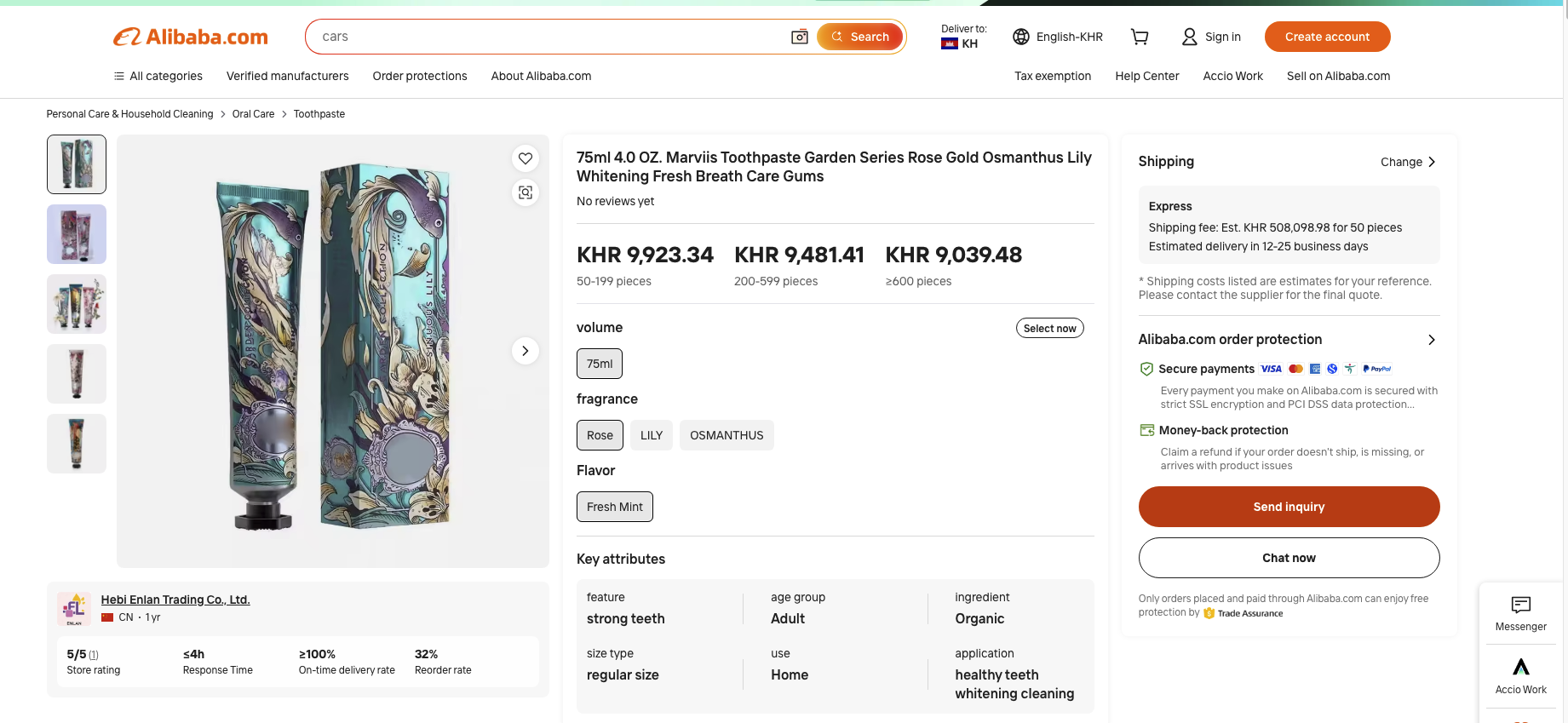
i think BCM ordered these on alibaba. view below the print-on-demand prices for fake wholesale marvis toothpaste from china! this is very probably the exact product in question:
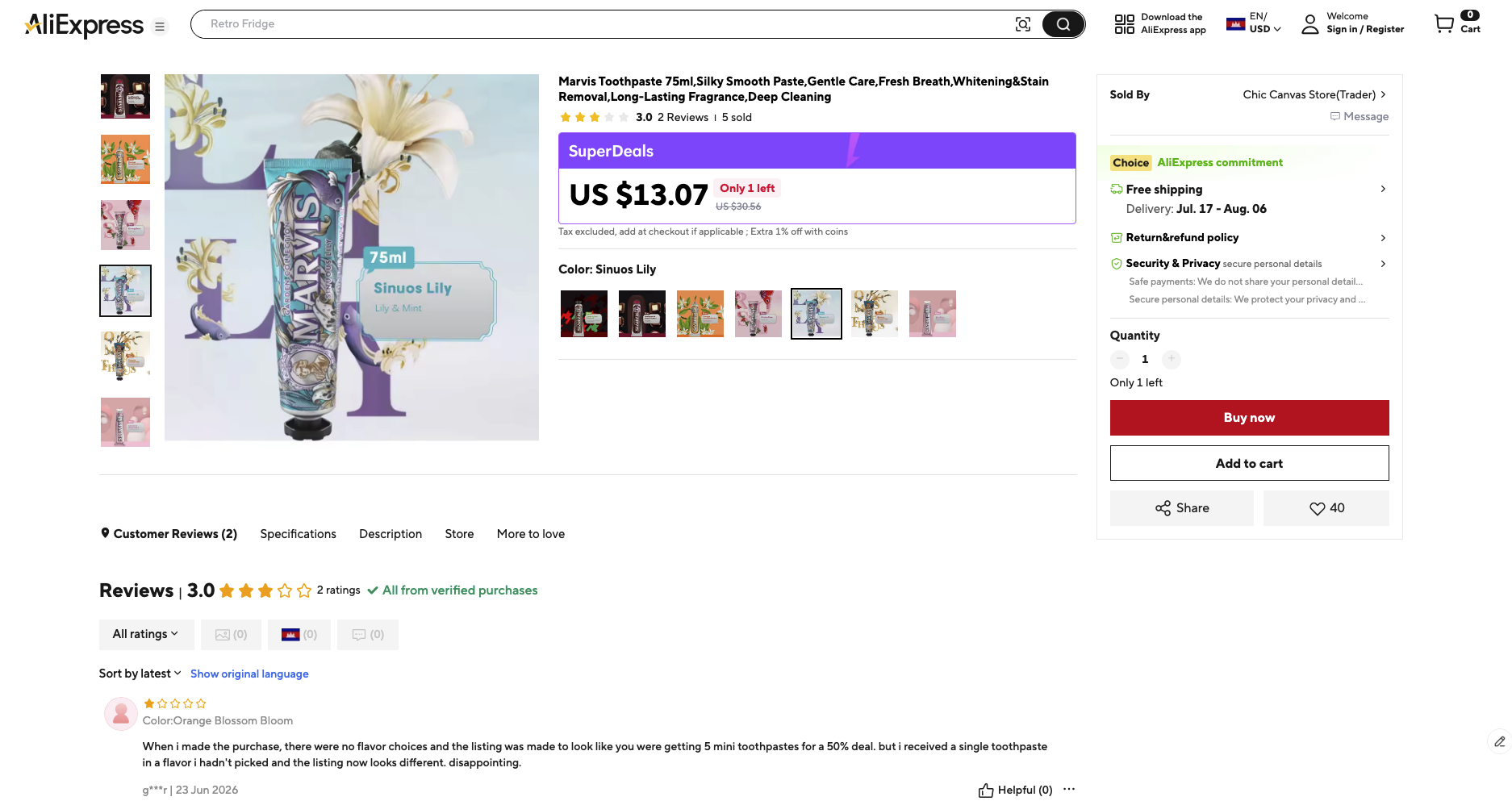
and here’s someone (or the same factory, who knows) who’s had the fakes printed up and is selling them at retail price to unhappy customers on aliexpress:
it’s troubling that BCM thinks saying “crosschecked with our suppliers” makes their dealings or vendors sound legitimate. hello, the only supplier you can buy Marvis wholesale from is Marvis! every tube is 100% made in Florence, Italy; not even the components are made in China, it cannot be ordered in almost-same-quality after-hours unauthorized runs the way some designer handbags etc. can. any product that’s not shipped by ludovico martelli spa from italy is fake.
there’s no way to check fake products on marvis.com, so they didn’t actually do that.
it’s possible BCM were duped by someone in country claiming to be an official distributor of european imports who’s actually just selling fakes.
of course the barcode on the fake is the same as the real barcode, it’s a copy of it. every side of the fake box is like a bad photocopy of the real box. this is shown clearly in my comparison photos above of the ingredients list and barcode. it’s the 5th picture down. barcodes are very old technology and plugging in or scanning a copy of a barcode has the same result as plugging in or scanning the real barcode. so, google can only sometimes point to the origin of the barcode, and cannot identify whether the product labeled with it is authentic, obviously– it’s a rudimentary AI search engine, not a biochem lab.
they absolutely did not verify in “gimini” that the toothpaste is real. there’s no way to do so, and gEmini will tell you so itself:
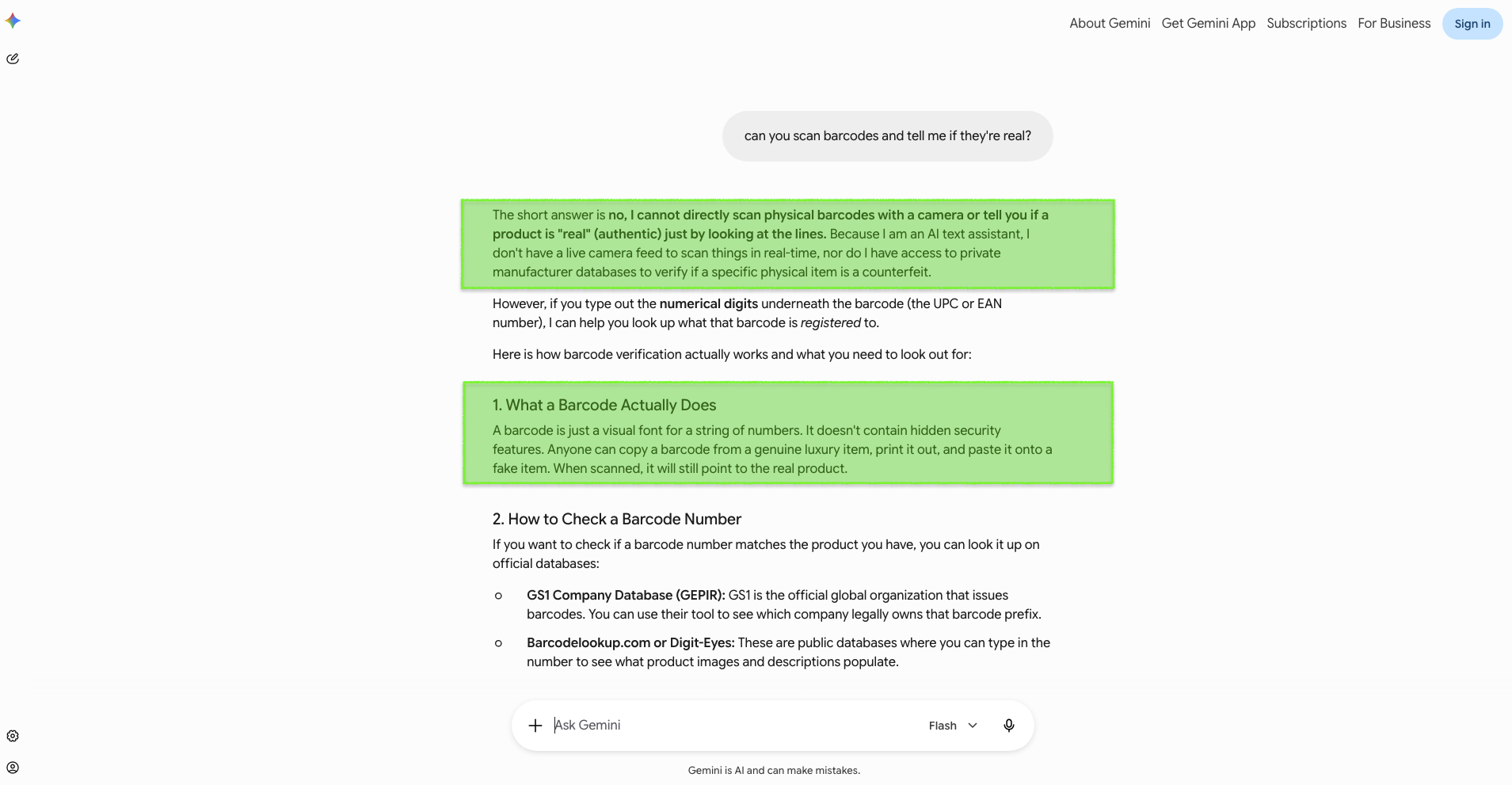
but in fairness, maybe they thought they verified in Gemini, if they don’t understand how barcodes work. this is the response gemini gave me to what i imagine they queried (assuming they actually bothered and weren’t just plugging buzzwords like crosscheck, suppliers, gemini, barcode etc. in an attempt to build credibility, which is what i actually believe):
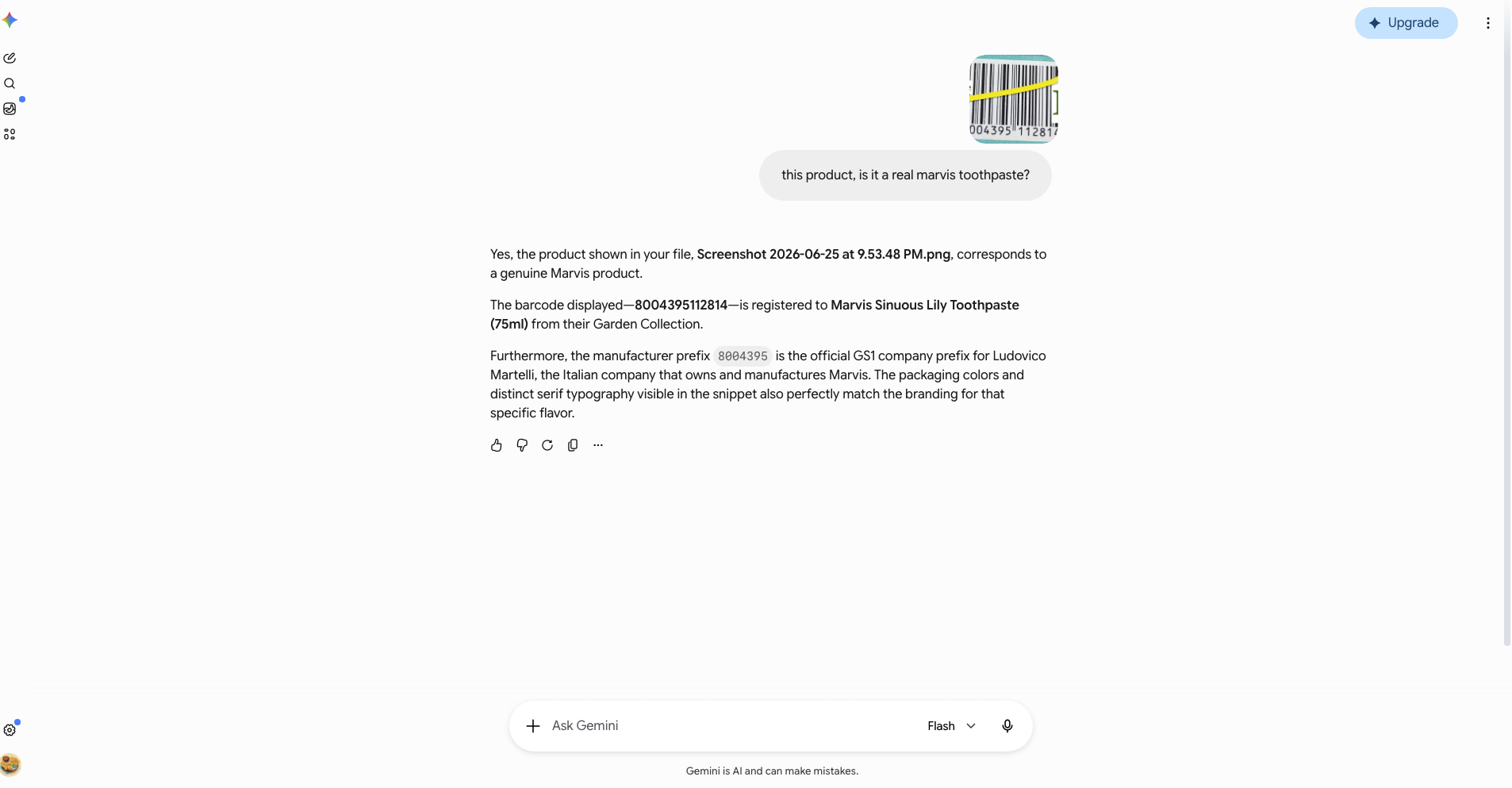
at any rate, i think they know or strongly suspect the toothpaste is fake and this response was just saving face. there’s one small and one big reason saving face doesn’t work here:
first, calling a regular customer of some years a liar and/or a fool is rude and a bit dumb; my purchases and ATM fees do add up and now i personally will never set foot in the shop again . . . though obviously that’s a negligible loss to a humming business.
the much bigger problem is their doing so on google maps, because they’re trying to sell a western product to westerners, and
westerners don’t go for saving face. we go for transparency, accountability, and promptly righting wrongs.
the correct response is closer to omg we didn’t know thanks for telling us we’re no longer working with this supplier come in and pick out any other toothpaste you want. a reply like that makes customers think BCM cares about authenticity and cares about their customers. that’s still the correct response even if i’m just some crazy lady who’s totally wrong and the toothpaste is authentic– with it, BCM can broadcast their generosity and magnanimity for the price of a single generic tube of toothpaste.
their actual reply shows customers they have no idea how to authenticate products and don’t use authorized distributors, and that’s super dangerous when it comes to cosmetics, alcohol, and food.
their actual reply tells western consumers of imported western products they don’t care about authenticity, won’t stop selling fakes, won’t take responsibility for the fakes they’ve sold, and won’t proffer any sort of of solution if you accidentally buy a fake from them.
their actual reply shows hubris, considered the central tragic flaw in western cultures for many thousands of years and therefore very off-putting to western consumers– after all, simply not responding was an option, but they had to put their foot in it!
i’d never die on a hill arguing with a khmer woman that my sampot was handwoven cambodian silk if she pointed out that it was chinese poly; given that she’d been exposed to the genuine article her whole life, i’d question my sampot, not her judgment. i’d do so not only because the odds of my being correct were low and falling, but because it is bad manners to not even pretend to consider an earnest concern. BCM arguing with me about marvis toothpaste is equally absurd and presumptuous.
BCM if you’re reading this YOU’RE WELCOME for the PR lesson!